
Civil construction trends shaping Auckland projects for 2026
- Jay Price
- 2 days ago
- 8 min read

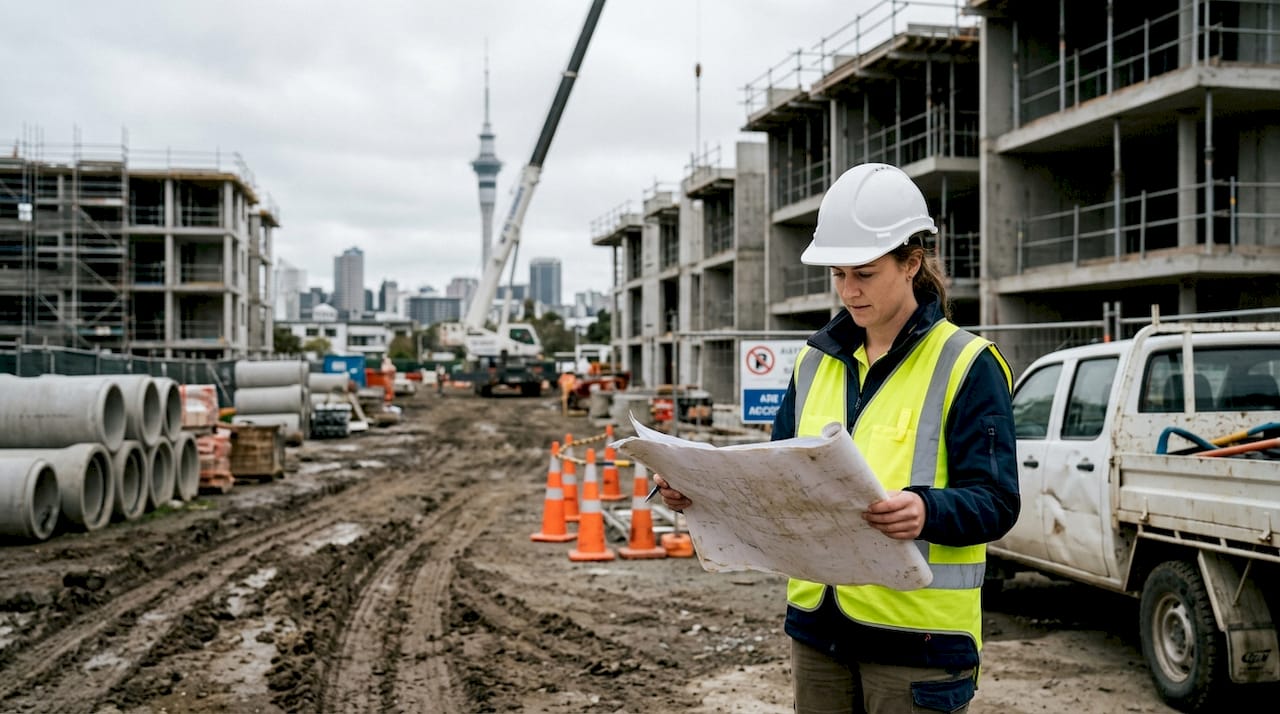
Auckland’s infrastructure landscape is shifting faster than most project timelines allow for comfortable adjustment. Between tightening carbon regulations, persistent labour shortages, and a wave of new digital tools, real estate developers and construction managers face a genuine challenge: which trends actually move the needle on project performance, and which are just noise? Digital twins, BIM 5D, AI and IoT are now standard expectations on major civil projects, not future aspirations. This guide cuts through the complexity and gives you a practical, sector-specific view of what is reshaping Auckland civil construction in 2026.
Table of Contents
Digitising project delivery: BIM, digital twins and AI integration
Prefab, modular and robotics: Reshaping build speed and efficiency
Low-carbon materials: Mandatory standards and lifecycle analysis
Equipment automation: Safety, telematics and compact machines
Major Auckland civil infrastructure spending priorities 2025 to 2026
Long-term planning and workforce trends for Auckland construction
Key Takeaways
Point | Details |
Digital integration standard | BIM, digital twins and AI are now essential for site management and risk reduction. |
Prefab and modular reduce costs | Using prefab and modular techniques can cut emissions by over 90% and deliver major productivity savings. |
Low-carbon materials mandatory | Lifecycle documentation and low-carbon materials are increasingly required for Auckland permits. |
Equipment automation boosts safety | AI cameras, telematics and compact machines drive safer, more efficient urban civil works. |
Align with infrastructure priorities | Focusing on transport, water and flood resilience projects matches Auckland’s major spending focus. |
Digitising project delivery: BIM, digital twins and AI integration
The shift to digital project delivery is no longer optional for competitive civil construction projects in Auckland. BIM 5D, which integrates cost and time data directly into 3D models, gives project managers a live forecast of budget and schedule impacts before a single machine moves. That kind of foresight used to require weeks of manual modelling. Now it updates in real time.
Digital twins take this further by creating a virtual replica of a physical site or structure. You can monitor ground conditions, structural loads, and construction progress simultaneously, reducing the risk of costly surprises mid-project. Auckland’s City Rail Link is a well-documented example of digital integration at scale, using sensor networks and model-based coordination across multiple contractors.
AI and machine learning tools are also reshaping scheduling. Rather than relying on historical averages, AI-driven platforms analyse live site data, weather patterns, and supply chain inputs to generate smarter sequencing. Sustainable design research increasingly supports the integration of these tools as a way to reduce material waste and improve lifecycle outcomes.
Here is what a digitally integrated project toolkit looks like in practice:
BIM 5D modelling for cost and time forecasting
Digital twin platforms for real-time site monitoring
AI-driven scheduling to reduce delays and resource conflicts
IoT sensors for safety alerts, equipment tracking, and progress data
Cloud-based collaboration tools for multi-contractor coordination
Pro Tip: If you are evaluating a civil contractor for a 2026 project, ask specifically whether they use BIM 5D or digital twin tools. Contractors who cannot demonstrate this capability are likely to introduce avoidable risk into your programme.
Prefab, modular and robotics: Reshaping build speed and efficiency
As digitisation drives smarter decisions, the physical build process is also evolving rapidly. Prefabricated and modular construction methods are no longer limited to residential builds. They are now expanding into bridges, stormwater systems, retaining structures, and utilities across Auckland.
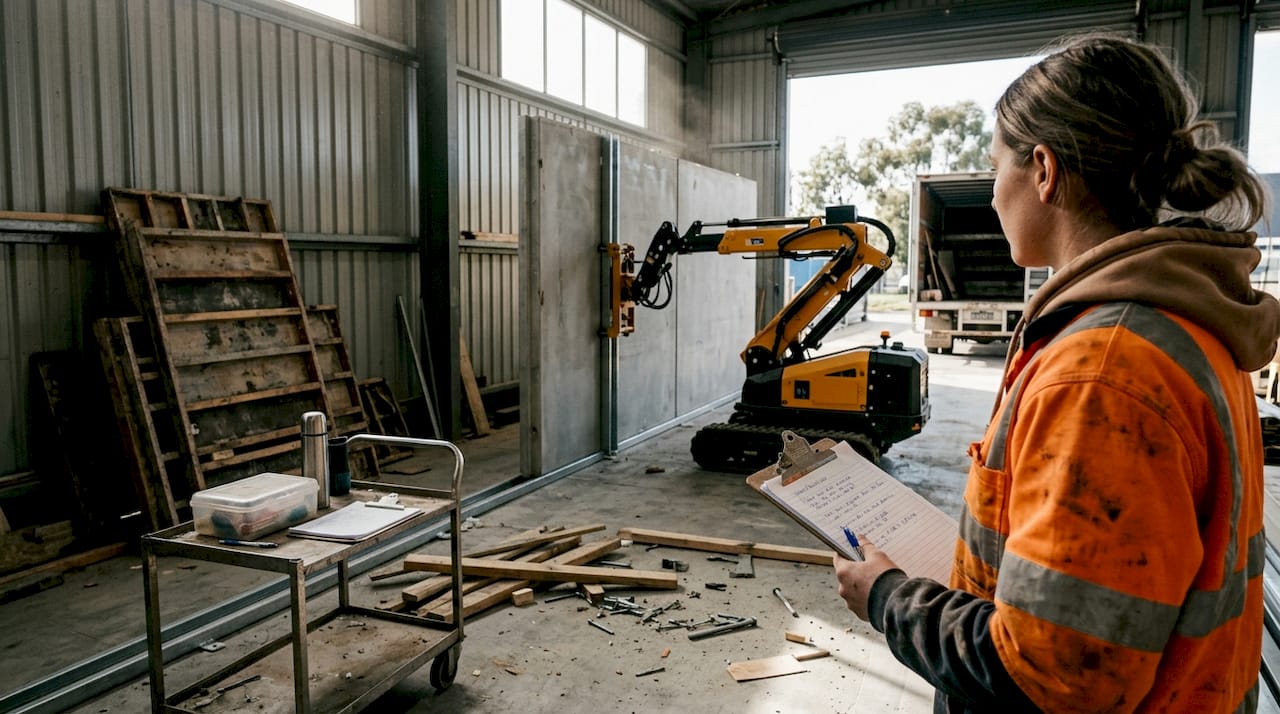
The productivity case is compelling. 90% of prefab users report measurable productivity gains, and the same source confirms prefab reduces emissions by over 90% compared to traditional methods. For Auckland developers managing tight timelines and carbon commitments, that is a significant dual benefit.
Modular stormwater systems are a strong local example. Products like Stormcell modular attenuation systems are increasingly specified for Auckland subdivisions because they can be installed faster, with less excavation, and with predictable performance outcomes. Modular and prefab methods are now delivering up to 78% schedule savings and 66% cost savings on civil works.
Robotics is also addressing the labour shortage problem directly. Automated rebar tying, concrete pouring, and compaction equipment reduce reliance on skilled tradespeople for repetitive tasks, freeing your workforce for higher-value work.
Key benefits of prefab and modular methods for Auckland projects:
Reduced on-site labour hours and associated health and safety exposure
Faster programme delivery with factory-controlled quality
Lower material waste and carbon emissions
Predictable cost outcomes with fewer variations
Compatibility with sustainable land development goals
“Prefab and modular construction is not just a speed play. For Auckland developers, it is increasingly the most reliable path to meeting both budget and carbon targets on the same project.”
Pro Tip: When specifying drainage solutions for new subdivisions, ask your civil contractor whether modular attenuation or prefabricated pit systems are available. The upfront cost difference is often recovered within the first two weeks of faster installation.
Low-carbon materials: Mandatory standards and lifecycle analysis
From speed and efficiency, the conversation shifts to material choices, which are now a compliance issue as much as a sustainability preference. Carbon documentation is increasingly required as part of the Auckland permit process, and low-embodied carbon materials are moving from optional to mandatory across many project types.
This means lifecycle assessment (LCA) is no longer just a green credential. It is a project delivery requirement. LCA documents the total carbon impact of a material from extraction through to end of life, and Auckland Council is progressively embedding this into consent conditions for larger developments.
Here is a comparison of common civil construction materials and their relative lifecycle impacts:
Material | Embodied carbon | Recyclability | Common Auckland use |
Standard concrete | High | Low | Foundations, driveways |
Low-carbon concrete | Medium | Low | Foundations, retaining walls |
Mass timber | Low | Medium | Structural framing, bridges |
Recycled asphalt | Low | High | Roads, car parks |
Prefab concrete panels | Medium to low | Medium | Walls, drainage structures |
Prefab methods remain the strongest lever for emissions reduction. Prefab reduces emissions by over 90% compared to conventional site-built equivalents, making it the most impactful single decision a developer can make on carbon grounds.
Practical steps for managing material compliance in 2026:
Request LCA documentation from suppliers before specifying materials
Prioritise recycled asphalt for car parks and access roads
Specify low-carbon concrete mixes for foundations where structural requirements allow
Engage your civil contractor early to identify sustainable materials that meet consent conditions
Keep a project carbon register from day one to simplify permit submissions
Equipment automation: Safety, telematics and compact machines
After examining materials, the focus moves to site operations. Equipment automation is one of the fastest-moving areas in civil construction, and it is directly affecting safety outcomes, productivity rates, and fleet management costs on Auckland sites.
Grade control, AI cameras, telematics, and sensor fusion are now standard features on modern civil equipment, and compact machines are dominating urban project sites where space and access are constrained.
Top equipment automation innovations reshaping Auckland civil sites in 2026:
AI safety cameras that detect proximity hazards and alert operators in real time
Grade control systems that automate cut and fill precision, reducing rework
Telematics platforms that track fuel use, idle time, and maintenance schedules across entire fleets
Sensor fusion technology that combines GPS, accelerometer, and load data for real-time equipment health analytics
Compact excavators and loaders with full automation capability for tight urban sites
“Telematics data from a single machine can identify $15,000 to $20,000 in annual savings through reduced idle time and predictive maintenance alone. Multiply that across a fleet and the business case is immediate.”
For civil contractor insights on how equipment selection affects project outcomes, the shift toward compact, automated machines is particularly relevant for Auckland’s infill development and subdivision market, where access constraints are common.
Major Auckland civil infrastructure spending priorities 2025 to 2026
Once technological and material innovations are understood, the next question is where investment is actually going. Auckland Council’s six-month capital spend to December 2025 reached $1.8 billion, with $654 million directed to transport and $564 million to three waters. The infrastructure deficit nationally sits at $210 billion, signalling sustained demand for civil works well beyond 2026.
Watercare’s long-term investment programme is a major driver for Auckland developers. Integrated service planning, where stormwater, wastewater, and water supply are coordinated from the earliest design stage, is now strongly recommended to avoid costly redesigns during consent.
The NZ construction outlook points to a recovery phase after NZ revenue fell 5% to $94 billion, with growth expected to resume through 2026 as public infrastructure programmes accelerate.
Priority sector | Key projects | Developer relevance |
Transport | CRL, road upgrades | Access and connectivity for new developments |
Three waters | Watercare upgrades | Integrated service connections |
Flood resilience | Stormwater networks | Consent requirements for new subdivisions |
Housing infrastructure | Subdivision enabling works | Direct alignment with developer pipelines |
Key impacts for developers and construction managers:
Align land development processes with Council spending priorities to reduce consent friction
Engage drainage priorities early, particularly for flood-prone catchments
Use engineering specialists to navigate integrated infrastructure requirements
Factor CRL-linked transport upgrades into site access and staging plans
Long-term planning and workforce trends for Auckland construction
Wrapping up the trend list, workforce and planning strategies are the foundation that makes every other innovation viable. Labour shortages are not easing. In fact, 37% of construction workers have under five years of experience, which creates real risk on complex civil projects that depend on experienced judgement.
This is accelerating prefab and modular adoption, because factory-controlled processes reduce dependence on scarce skilled site labour. AI tools are also improving individual worker productivity, helping smaller teams deliver what previously required larger crews.
Contract structures are shifting too. Fixed-price contracts are increasingly preferred by developers seeking cost certainty in a volatile materials market. Outcome-based planning, where contracts are structured around delivered results rather than input hours, is gaining traction as part of NZ’s 30-year infrastructure plan which emphasises whole-life cost and resilience.
Practical strategies for workforce and planning resilience:
Prioritise contractors who use prefab and modular methods to reduce labour dependency
Structure contracts with fixed-price components where scope is well-defined
Build whole-life cost analysis into project feasibility from the start
Invest in technology-forward roles to attract younger workers to your projects
Review your NZ civil project overview to align procurement with current market conditions
Pro Tip: Younger workers entering the industry are drawn to technology-forward environments. If your sites use telematics, BIM, and digital reporting tools, you will find it significantly easier to attract and retain the next generation of civil professionals.
Connect with Auckland’s leading civil construction experts
The trends covered in this article are not distant possibilities. They are active forces reshaping how Auckland projects are planned, priced, and delivered right now. Staying ahead means working with a civil contractor who is already operating at this level, not one who is still catching up.
Bromley Group brings hands-on expertise across earthworks, drainage, and subdivision civil works for Auckland’s residential and commercial development market. From site cuts and retaining walls to stormwater systems and concrete foundations, we deliver projects with the precision and programme certainty that modern developers require. If you are planning a 2026 project and want a civil partner who understands where the industry is heading, get in touch with the Bromley Group team today.
Frequently asked questions
What is BIM 5D and how does it benefit Auckland civil construction?
BIM 5D integrates time and cost data into 3D models, giving Auckland project managers live forecasting capability to manage budgets and reduce programme risk before works begin.
Are low-carbon materials required for Auckland permits in 2026?
Yes. Carbon documentation is now increasingly embedded in Auckland permit conditions, and low-embodied carbon materials are transitioning from a voluntary choice to a regulatory expectation.
What are the biggest cost and productivity savings in Auckland civil projects?
Prefab and modular methods deliver up to 78% schedule savings and 66% cost savings, making them the most impactful efficiency lever available to Auckland civil project managers.
Why are compact machines dominating the Auckland civil equipment market?
Compact machines combine automation, telematics, and grade control in a footprint suited to Auckland’s urban and infill development sites, improving both safety and productivity in constrained conditions.
How should construction managers future-proof Auckland projects?
Adopt outcome-based planning and whole-life cost analysis from the feasibility stage, and engage technology-forward contractors who can reduce labour dependency through prefab and digital delivery methods.
Recommended