
Master the site cut preparation process for Auckland builds
- Jay Price
- 2 days ago
- 8 min read

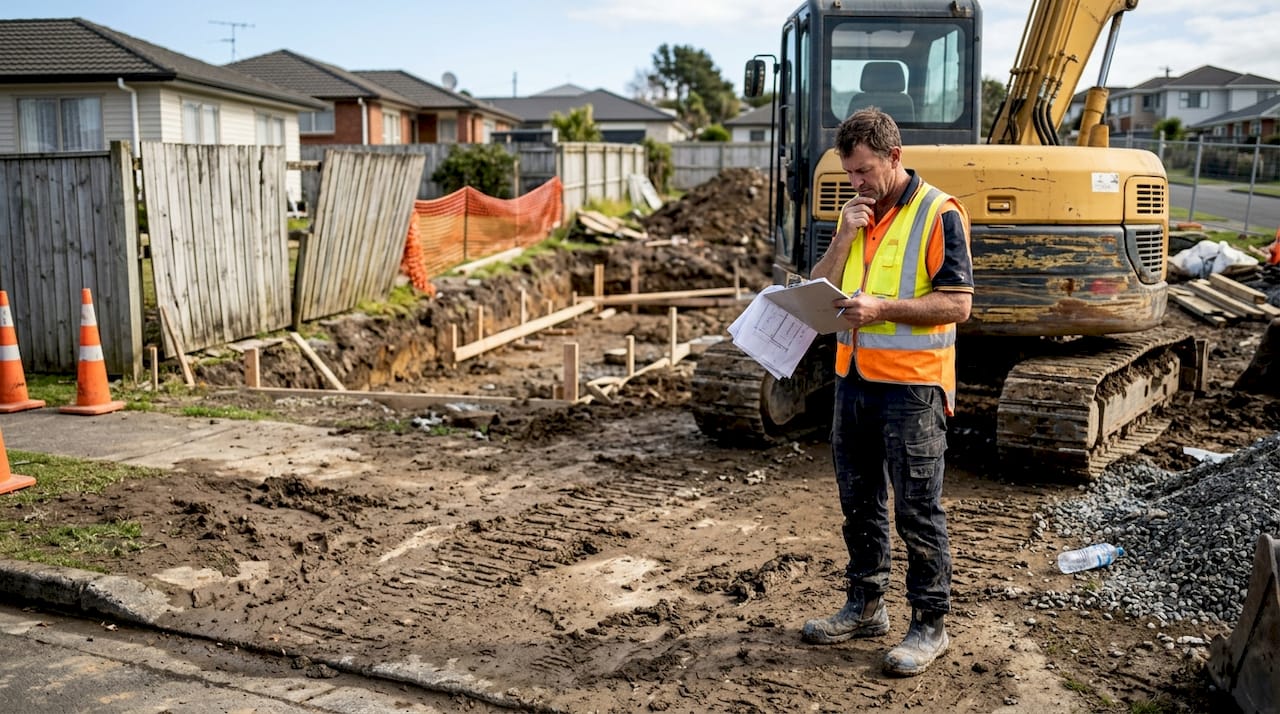
Unexpected cost blowouts and programme delays are the two things Auckland property developers fear most, and poor site cut preparation is behind more of them than most builders care to admit. A site cut that starts without proper planning can unravel fast, triggering consent issues, structural failures, and cartage costs that blow your contingency before the slab is even poured. This guide walks you through every critical stage of the site cut preparation process, from initial assessment through to final sign-off, so your next Auckland development starts on solid ground and stays on schedule.
Table of Contents
Key Takeaways
Point | Details |
Planning is critical | Careful planning and the right documentation prevent delays and cost overruns on Auckland site cuts. |
Site-specific expertise | Expert geotech assessment and compliance with local council requirements are non-negotiable. |
Cut/fill and compaction | Balancing earthworks on-site and verifying compaction ensures lasting, structurally sound results. |
Season and access matter | Timing your works for dry months and ensuring clear site access both lower risks and costs. |
Quality checks save trouble | Final compliance checks and documentation prevent future regulatory and structural issues. |
What is site cut preparation and why it matters
Site cut preparation is the process of reshaping and grading land to create a stable, level building platform suited to your design and engineering requirements. It is not simply digging a hole. It involves a coordinated sequence of survey work, geotechnical investigation, consent approvals, earthmoving, compaction, and drainage planning, all of which must align before any foundation work can legally begin.
Get it wrong and the consequences are serious. Unstable cut batters can collapse. Poor drainage paths cause long-term foundation movement. Incorrect fill compaction leads to differential settlement that cracks slabs and walls years after handover. These are not theoretical risks. They are the kinds of defects that end up in disputes and litigation.
For Auckland projects specifically, resource consent for earthworks requires detailed plans covering topography, cut and fill volumes, batter profiles, erosion and sediment control, an Assessment of Environmental Effects (AEE), and stability assessments. Skipping or rushing any of these elements puts your consent at risk and your project timeline in jeopardy.
Key factors that determine the complexity of your site cut include:
Slope gradient and existing topography
Soil type, particularly Auckland’s volcanic clays
Proximity to boundaries, services, and neighbouring structures
Volume of material to be cut, filled, or removed
Stormwater and drainage requirements
Vegetation and tree protection obligations under the Unitary Plan
A site cut is not just an earthworks task. It is the foundation of your entire development programme. Errors made at this stage compound through every subsequent trade and inspection.
For a broader overview of what Auckland earthworks involves across different project types, it helps to understand the full scope before committing to a programme.
After outlining the stakes, let’s look at exactly what’s required before machinery hits the ground.
Key requirements and tools for site cut preparation
Before a single bucket of earth is moved, you need several critical items in place. Missing even one can halt your project mid-cut, which is far more expensive than getting organised upfront.
Core requirements for Auckland site cut preparation include:
Topographical survey confirming existing levels and boundaries
Geotechnical report assessing soil bearing capacity and stability
Resource consent documentation including cut and fill plans and AEE
Erosion and sediment control plan meeting Auckland Council standards
Site access management plan for machinery and material movement
Cut and fill balance plan to minimise cartage costs
Earthworks costs in Auckland typically range from $80 to $150 per cubic metre, or $120 to $200 per hour for machine time. Geotechnical reports add $1,500 to $5,000 depending on complexity. Auckland’s volcanic clay soils are particularly challenging and can push costs toward the upper end of those ranges. Timing also matters. The October to April dry season is strongly preferred for major earthworks.
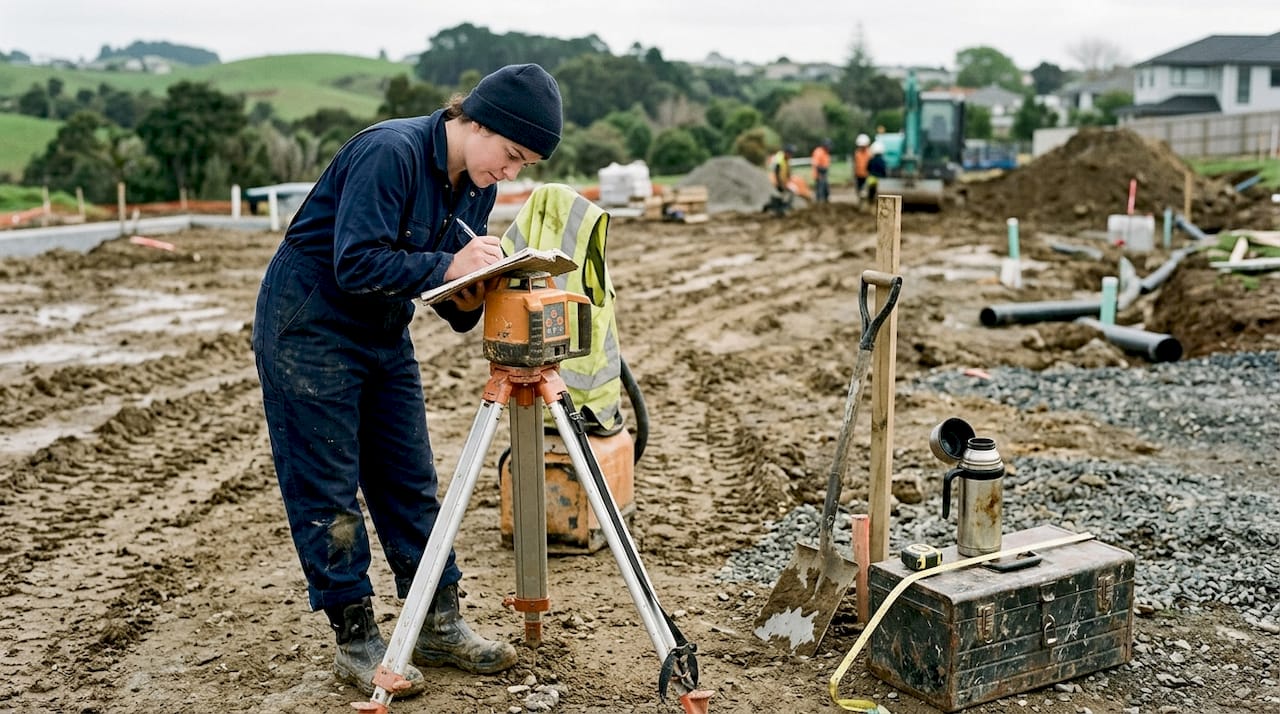
Requirement | Estimated cost | Responsible party |
Topographical survey | $1,500 to $3,500 | Licensed surveyor |
Geotechnical report | $1,500 to $5,000 | Geotechnical engineer |
Resource consent preparation | $2,000 to $8,000+ | Planner or engineer |
Earthworks (cut and fill) | $80 to $150 per m³ | Civil contractor |
Erosion and sediment control | $500 to $3,000 | Civil contractor |
Compaction testing | $800 to $2,500 | Testing laboratory |
Understanding the site preparation essentials specific to Auckland conditions helps you budget accurately and avoid surprises. Engaging experienced civil contractors early in the design phase can also reduce consent preparation time significantly.
With the essentials clear, let’s walk through the site cut process step-by-step.
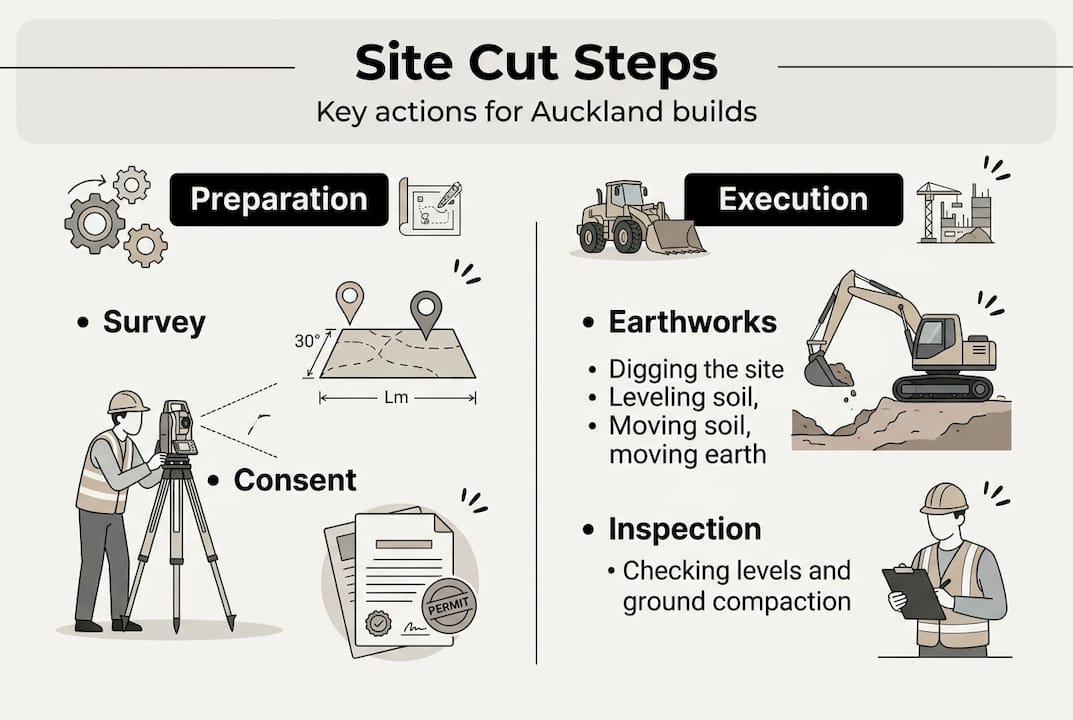
Step-by-step: The site cut preparation process in Auckland
Following a structured sequence is what separates a smooth site cut from a costly rework. Here is the process we follow and recommend for Auckland residential and subdivision projects.
Initial site assessment and survey. Commission a topographical survey and walk the site with your engineer. Identify constraints including services, trees, boundaries, and drainage paths before any design is locked in.
Geotechnical investigation and reporting. Engage a geotech engineer to assess soil conditions, bearing capacity, and slope stability. This report directly informs your cut and fill design and is required for consent.
Securing consents and environmental protection measures. Lodge your resource consent with Auckland Council, including all required plans and the AEE. Install erosion and sediment controls before any ground is disturbed.
Marking out works and establishing safe access. Peg out cut lines, fill areas, and batter profiles on site. Establish a stable access track for machinery to prevent site damage and safety incidents.
Machining: cut, fill, and material balance. Execute the earthworks to design levels. Balance cut and fill on-site wherever possible to reduce cartage costs and programme time.
Compaction to engineer specifications and test coordination. Compact all fill layers to the density specified by your engineer. Coordinate compaction testing at each layer, not just at the end.
Final sign-off, erosion control, and setting out for construction. Confirm finished levels with your surveyor, ensure all erosion controls are in place, and obtain engineer sign-off before setting out for foundations.
Pro Tip: Engage your geotechnical engineer at the design stage, not after consent is lodged. Early geotech input can reshape your cut and fill design in ways that save significant cost and reduce consent risk. Timing major earthworks for the dry season also reduces weather delays and compaction failures.
Step | Key action | Common pitfall |
Site assessment | Survey and constraint identification | Skipping boundary checks |
Geotech investigation | Soil and stability assessment | Ordering report too late |
Consent and controls | Lodge consent, install ESC | Starting works before consent |
Marking out | Peg cut lines and access | Incorrect set-out from survey |
Machining | Cut, fill, and balance | Over-cutting or poor balance |
Compaction | Layer testing to spec | Testing only at completion |
Final sign-off | Engineer and surveyor confirmation | Missing drainage verification |
For reference, site preparation benchmarks from comparable residential construction markets reinforce the importance of sequential sign-offs at each stage. The Auckland earthworks process follows the same logic, adapted for local council requirements.
After you complete the main process, keep an eye out for common mistakes and ways to optimise the outcome.
Common pitfalls and expert tips
Even experienced builders make avoidable mistakes on site cuts. Knowing where projects typically go wrong gives you a real advantage.
The most common pitfalls we see on Auckland sites include:
Incorrect soil assessment leading to under-designed batters or fill failures
Poor weather timing causing compaction failures and programme blowouts
Underestimating compaction requirements on filled areas, particularly near boundaries
Skipping or delaying geotech until after consent is lodged, forcing redesigns
Ignoring permit thresholds under the Auckland Unitary Plan for vegetation removal and earthworks volumes
Failing to balance cut and fill on-site, resulting in unnecessary cartage costs
Pro Tip: Order compaction testing as part of your earthworks package from the outset. Trying to arrange a testing laboratory mid-project adds delays and often means waiting days for results before the next layer can proceed. Build it into the programme from day one.
On the expert side, balancing cut and fill on-site and coordinating compaction testing at each fill layer are the two actions that most consistently keep projects on time and within budget. Both are easy to plan for and expensive to retrofit.
Compliance risk: Commencing earthworks without resource consent, or failing to maintain erosion and sediment controls, can result in enforcement action from Auckland Council, stop-work orders, and significant remediation costs. These risks are entirely avoidable with proper preparation.
For projects that include concrete base works such as driveways, slabs, or foundations, the quality of the compacted subgrade directly determines the performance of the concrete above it. A poorly prepared platform is not something you can fix after the pour.
Once you’re aware of pitfalls, verify your work meets standards before progressing.
Quality checks and compliance verification
Completing the earthworks is not the finish line. Before foundation works can legally begin, your site cut must pass a sequence of checks that confirm it meets engineering, council, and environmental standards.
Compaction testing. A certified testing laboratory must confirm that all filled areas meet the density specified in your geotechnical report. Results must be documented and retained for council inspection.
Drainage verification. Confirm that finished levels direct stormwater away from the building platform and toward approved discharge points. This is checked against your drainage design, not just visually assessed.
Council inspection. For consented earthworks, Auckland Council may require a site inspection before foundation works commence. Confirm inspection requirements with your consent conditions.
Engineer sign-off. Your geotechnical or structural engineer must confirm that the completed platform meets design intent. This sign-off is typically required before your building consent inspection sequence begins.
Erosion and sediment control confirmation. All controls must remain in place and functional until permanent vegetation or hard surfaces are established.
Only compliant site cuts can legally proceed to foundation works under Auckland Council rules. Projects that skip or shortcut this verification sequence face stop-work orders, failed inspections, and costly remediation. For projects involving retaining wall standards, the compaction and drainage verification requirements are even more critical given the structural loads involved.
For reference on how compliance plan benchmarks are structured in comparable markets, the sequential sign-off model is consistent across well-regulated construction environments. Auckland’s requirements follow the same logic.
For those ready to proceed or seek expert help, here’s how Bromley Group supports Auckland developments.
Get expert help with your Auckland site cut project
Site cut preparation done properly protects your programme, your budget, and your consent. Done poorly, it creates problems that follow a project all the way through to handover and beyond. Bromley Group delivers end-to-end Auckland site cut services for residential developers and builders, covering everything from initial assessment and consent support through to compaction testing coordination and final sign-off.
Whether you’re working on a single residential section or a multi-lot subdivision earthworks project, our team brings the local knowledge, equipment, and compliance experience to get your platform right the first time. We work with your engineers and surveyors to keep the process moving and the paperwork in order. Request a site cut quote today and get a clear picture of what your project needs before ground is broken.
Frequently asked questions
How long does the site cut preparation process take in Auckland?
Typical projects take 2 to 4 weeks, depending on weather, consent timeframes, and site complexity. October to April is the preferred window for major earthworks due to drier conditions.
Do all Auckland site cuts need a resource consent?
Significant earthworks require resource consent and detailed planning documentation under Auckland Council rules. Always confirm thresholds with your planner before starting.
What is the main cost driver for site cut preparation?
Volume of earth shifted, soil type, and site access are the biggest cost factors. Costs vary significantly based on these variables, with Auckland’s volcanic clays often pushing prices higher.
Why is a geotechnical report needed?
A geotech report assesses ground stability and bearing capacity, both of which are essential for council approval and safe engineering design. Geotech reporting is a non-negotiable requirement for consented earthworks in Auckland.
How do you avoid common site cut mistakes?
Complete your soil and geotech assessment early, balance cut and fill on-site wherever possible, and coordinate compaction testing at every fill layer before progressing to the next stage.
Recommended