
Top residential project tips for Auckland developers
- Jay Price
- 2 days ago
- 8 min read

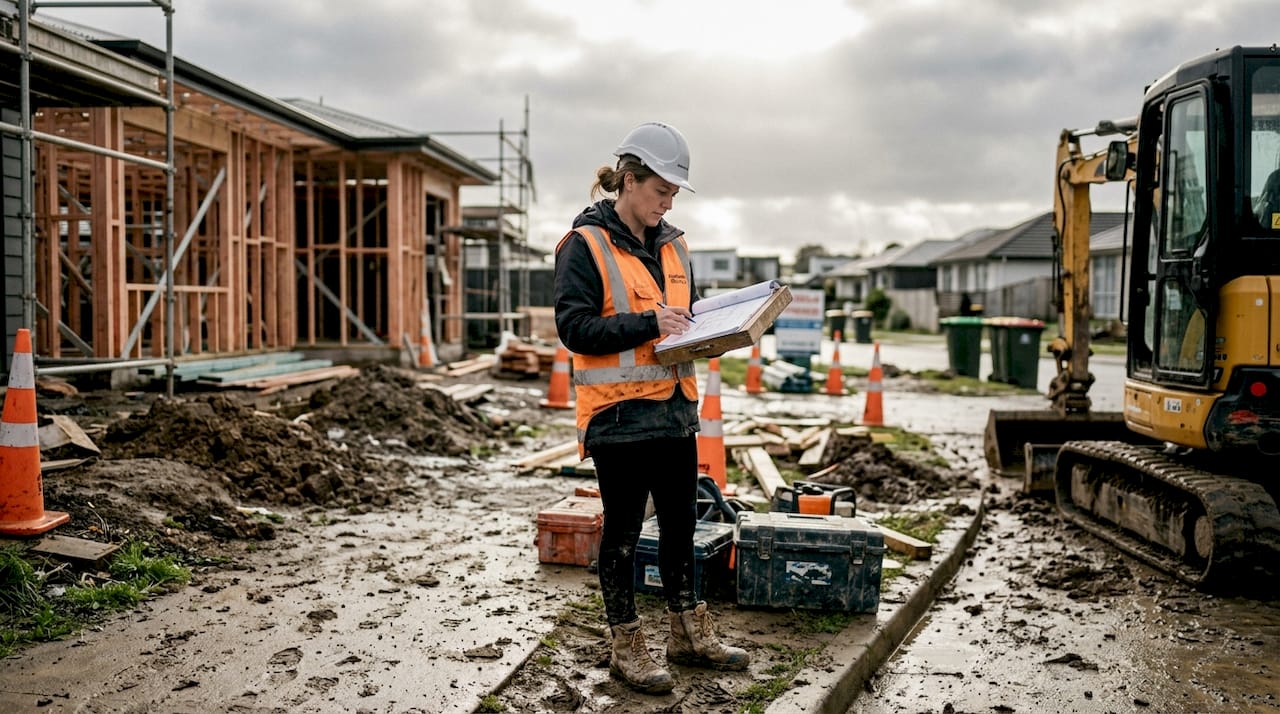
Even a well-funded Auckland residential build can spiral into costly overruns if site-specific pitfalls go unaddressed early. Auckland’s volcanic soils, clay-heavy terrain, and unpredictable rainfall create a unique set of challenges that catch underprepared developers off guard. Underbudgeting and poor builder selection are among the most common causes of budget blowouts on Auckland residential projects. This article delivers a methodical, evidence-backed checklist covering site investigation, budgeting, scheduling, team selection, and sustainability so you can execute your next project with confidence and avoid the mistakes that derail even experienced developers.
Table of Contents
Key Takeaways
Point | Details |
Site analysis first | Thorough early investigations help prevent costly structural or drainage problems later. |
Budget for reality | Include a 10–15 percent contingency and plan for variations and Auckland-specific delays. |
Weather smart scheduling | Schedule earthworks for October to April and build in weather contingency days. |
Pick proven partners | Always choose experienced, credentialed teams over lowest quotes to minimise risk. |
Design for resilience | Sustainability ratings like Homestar add long-term value and lower running costs. |
Know the site: Essential investigations before you start
Every successful Auckland residential project starts well before a single machine hits the ground. The site investigation phase informs every downstream decision, from foundation design to drainage layout to consent strategy. Skipping or rushing this step is one of the fastest ways to create expensive problems mid-build.
Auckland’s geology is genuinely complex. You’re dealing with a mix of volcanic rock, expansive clay, and variable fill across the region, and what sits beneath one corner of a site can differ dramatically from another. Volcanic and clay soils require compaction testing, and resource consent may be needed for earthworks depending on the scale and location of your project. Engaging a geotechnical engineer early gives you site-specific data rather than assumptions.
Here’s what your pre-construction investigation checklist should cover:
Geotechnical report: Soil bearing capacity, compaction requirements, and slope stability
Site survey: Accurate contours, boundaries, and existing features
Utility mapping: Location of underground services including water, gas, and telecoms
Stormwater and drainage assessment: Existing flow paths and council requirements
Contamination check: Especially relevant for infill sites or former industrial land
Access evaluation: Machinery access routes and any road-opening permit requirements
Consent review: Identify resource consent triggers before lodging building consent
Reviewing site preparation essentials specific to Auckland conditions will help you build a thorough pre-construction checklist. For broader context on managing land from the outset, land development best practices in Auckland are worth understanding before you commit to a programme.
“Proper site preparation prevents structural issues and costly rework down the track. The investment in investigation pays for itself many times over once construction begins.”
Pro Tip: Engage your geotechnical engineer before you finalise your purchase or development agreement. Their report may reveal conditions that change your feasibility numbers entirely.
Master your budget: Understanding full project costs
Once you know your site, next comes mapping out an airtight budget. Most developers underestimate total project costs because they focus on construction line items and overlook the full cost picture.

Variations can add 10 to 20% to the original contract sum, and consent fees alone typically run between $5,000 and $15,000. Custom home construction takes 9 to 14 months to build, with planning, design, and consents adding another 2 to 9 months on top. That’s a long runway where costs can accumulate if you’re not tracking them carefully.
Budget category | Typical range | Notes |
Site preparation | $10,000 to $50,000 | Varies with slope, soil, and access |
Consenting fees | $5,000 to $15,000 | Council and processing charges |
Construction contract | Project-specific | Get fixed-price where possible |
Variations allowance | 10 to 20% of contract | Non-negotiable buffer |
Contingency | 10 to 15% of total | Weather, delays, unforeseen issues |
Professional fees | $15,000 to $40,000+ | Engineers, surveyors, architects |
Common hidden costs that developers frequently miss include:
Weather delay costs: Labour and equipment standing time during wet periods
Access remediation: Repairing temporary access tracks or neighbouring property damage
Site remediation: Unexpected contamination or unsuitable fill removal
Utility relocation: Moving services that conflict with the design
Retaining walls: Often underestimated on sloped Auckland sections
For a deeper look at civil construction cost considerations in New Zealand, it’s worth reviewing what’s typically included in a civil scope before you finalise your budget.
Pro Tip: Insist that your builder’s estimate includes a realistic allowance for Auckland weather delays. If they don’t mention it, that’s a red flag about how they manage risk.
Plan for Auckland conditions: Weather, site access and timing
A solid budget in hand, the next hurdle is surviving Auckland’s unpredictable conditions. Auckland averages over 1,200mm of rainfall annually, and wet weather doesn’t just slow earthworks. It can destabilise cut batters, wash out drainage works, and create compaction failures that require expensive rework.
Earthworks season in Auckland runs from October through April, and section preparation can take several months depending on complexity. Planning your programme around this window significantly reduces weather-related risk.
Key timing and access considerations for Auckland projects:
Schedule earthworks for October to April to minimise wet weather exposure
Build in contingency days at a rate of at least one day per week of earthworks scheduled
Assess site access early for steep or narrow sections requiring specialised machinery
Coordinate with council on any road-opening permits or traffic management requirements
Stage works logically so drainage is installed before bulk earthworks are completed
Monitor forecasts actively and have a clear protocol for suspending and resuming works
For projects on challenging terrain, reviewing land development safety protocols is essential before mobilising equipment. Access planning on steep Auckland sections is not just a logistics issue. It’s a health and safety obligation.
Key stat: Weather delays on Auckland earthworks projects can add two to six weeks to a programme if contingency is not built in from the start.
Choose the right team: Builder selection and project management
With timing and budget set, the team you assemble makes or breaks delivery. Poor builder selection and late decisions are directly linked to 10 to 20% cost blowouts on residential projects. Choosing on price alone is one of the most expensive decisions a developer can make.
Here’s a practical process for vetting your build team:
Verify LBP status: All licensed building practitioners must hold a current licence. Check the MBIE register.
Confirm master builder or trade association membership: This signals commitment to standards and provides dispute resolution pathways.
Request a detailed scope of works: Vague scopes lead to variations. Insist on line-item specificity.
Check references on comparable projects: Ask specifically about budget adherence and communication.
Review insurance coverage: Public liability and contract works insurance are non-negotiable.
Assess their subcontractor relationships: Reliable subbies mean fewer delays and quality issues.
Clarify variation protocols: How are changes priced and approved? Get this in writing before signing.
For complex projects, engaging an independent project manager to oversee the build on your behalf is worth the fee. They catch issues before they become variations and keep the programme honest. Understanding construction project management fundamentals will help you ask the right questions during procurement.
“Choose experience over the lowest price. A builder who understands Auckland’s conditions will save you far more in avoided variations than the difference in their quote.”
Prioritise sustainable and resilient site strategies
Your builder might get you to code, but only sustainability makes the project future-proof. Early sustainability decisions don’t just reduce environmental impact. They lower operating costs, improve asset value, and can streamline the consent process.
The Resido development achieved a 9 Homestar rating through waste diversion and rainwater reuse at scale, demonstrating that sustainability outcomes are achievable on residential projects without blowing the budget. Their results included 92% waste diversion and measurable reductions in operational costs across the development.
Low-impact site strategies worth building into your programme from day one:
Rainwater harvesting: Install collection systems during the build rather than retrofitting later
Native species landscaping: Reduces irrigation demand and supports local ecology
Construction waste diversion: Set targets of 80%+ diversion from landfill and track them
Permeable paving: Reduces stormwater runoff and can simplify drainage consent
Thermal performance upgrades: Insulation and glazing choices made early cost far less than retrofits
Durable materials selection: Specify materials suited to Auckland’s coastal and humid conditions
For the structural elements of your build, concrete foundation and slab work done correctly from the start is one of the most durable sustainability investments you can make.
Pro Tip: Target a Homestar rating early in your design process. It creates a clear performance framework, can streamline council approvals, and adds demonstrable value at sale or lease.
Quick comparison: How leading projects address Auckland site challenges
To wrap up, let’s put these tips side by side for quick decision-making reference.
Project area | Typical approach | Best-practice approach | Payback |
Site investigation | Basic geotech only | Full geotech, contamination, utility mapping | Avoids costly mid-build surprises |
Budgeting | Construction cost only | Full cost model with 10 to 15% contingency | Prevents blowouts and variations |
Scheduling | Calendar-based | Weather-adjusted with contingency days | Reduces programme overruns |
Team selection | Lowest tender price | Credentials, references, detailed scope | Fewer variations and disputes |
Sustainability | Code minimum | Homestar target, waste diversion, rainwater | Lower ops costs, higher asset value |
The Resido project’s 92% waste diversion and 9 Homestar rating show what’s achievable when sustainability is built into the programme from the start rather than bolted on at the end. For developers working on subdivisions and civil infrastructure, reviewing Auckland subdivision civil works options early helps you align site strategy with long-term project outcomes.
The decisions with the biggest payback are consistently the ones made earliest: thorough site investigation, realistic budgeting, and selecting a team with proven Auckland experience.
Expert help for your Auckland project
Armed with these strategies, the right professionals can make the difference between a project that delivers on time and budget and one that doesn’t. At Bromley Group, we work with Auckland residential developers at every stage of the civil construction process, from initial site assessment through to earthworks, drainage, retaining walls, and concrete foundations.
Our Auckland earthworks team brings hands-on experience with the region’s volcanic soils, steep terrain, and weather-driven scheduling challenges. We also deliver retaining wall solutions engineered for Auckland’s specific ground conditions. If you’re planning a residential development and want practical input before you commit to a programme, book a site assessment with our team. We’ll give you honest, site-specific advice with no obligation.
Frequently asked questions
How long does full residential project delivery take in Auckland?
Custom builds typically require 9 to 14 months of construction, plus 2 to 9 months for planning, design, and consents. Factor this full timeline into your feasibility from day one.
What is a realistic site preparation budget for an Auckland development?
Site preparation commonly costs between $10,000 and $50,000 depending on soil conditions, slope, and existing infrastructure. Consent fees add a further $5,000 to $15,000 on top.
What are the most common avoidable mistakes for Auckland developers?
Underbudgeting by 20 to 40%, choosing builders on price over credentials, and skipping detailed site assessment are the three most costly and avoidable mistakes.
How can developers reduce delays due to Auckland weather?
Schedule earthworks for October to April, build in contingency days, and monitor weather forecasts actively throughout the earthworks programme.
Is targeting a Homestar rating worth it for Auckland residential projects?
Yes. As demonstrated by the Resido development’s outcomes, targeting Homestar early improves long-term operating costs, material durability, and overall asset resilience.
Recommended