
How to manage commercial construction in Auckland: a guide
- Jay Price
- 17 hours ago
- 7 min read

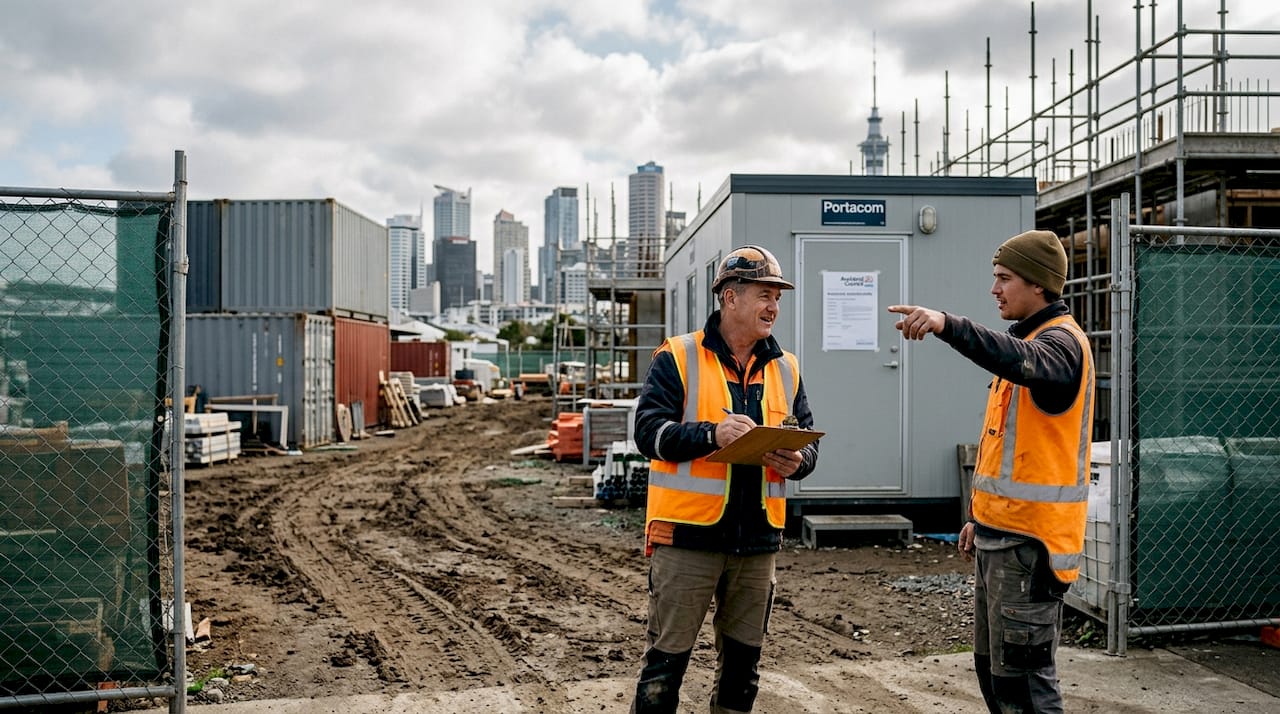
Commercial construction in Auckland is genuinely complex. Between Auckland Council’s layered consent requirements, variable ground conditions across the isthmus, and a competitive contractor market, even experienced developers can find projects stalling before a single sod is turned. This guide walks you through the essential prerequisites, the step-by-step build process, how to manage risk, and what quality sign-off actually looks like in practice. Whether you’re developing a commercial site from scratch or managing a staged infrastructure project, the practical framework here is built specifically for Auckland conditions.
Table of Contents
Essential prerequisites for commercial construction in Auckland
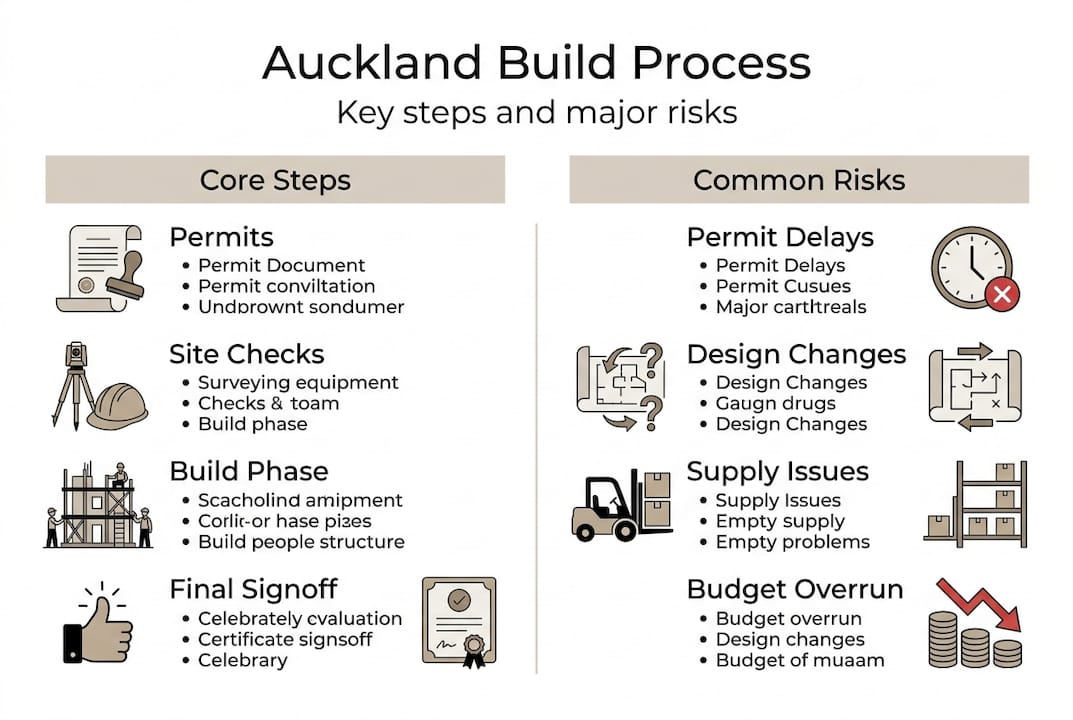
Managing risks and avoiding costly delays in Auckland projects
Verifying quality, compliance, and finalising your commercial project
The uncomfortable truth most Auckland commercial builders won’t tell you
Partnering with Auckland experts for your next commercial build
Key Takeaways
Point | Details |
Permits are crucial | Auckland projects require careful handling of zoning and building consents to avoid costly delays. |
Budget for risks | Always allocate a 10-15% contingency for site and permitting uncertainties during planning. |
Choose local experts | Experienced local builders and contractors are vital for navigating Auckland’s commercial construction process. |
Manage scope creep | Early contractor involvement can help, but watch for evolving project scope and contractor withdrawal risks. |
Final compliance matters | Ensure thorough inspections and documentation to meet quality and regulatory standards before handover. |
Essential prerequisites for commercial construction in Auckland
Before any physical work begins, your project needs a solid administrative and logistical foundation. Skipping or rushing this phase is the single most common reason Auckland commercial builds run over time and over budget.
The building process in New Zealand requires you to secure the correct permits and consents before construction can legally proceed. In Auckland, this typically means obtaining a resource consent (for zoning and land use), a building consent (for the structure itself), and any additional consents tied to drainage, earthworks, or heritage overlays. Understanding civil works permits early in your planning stage saves significant time downstream.
Site due diligence is equally critical. Geotechnical reports, contamination assessments, and utility mapping should all be completed before you finalise your design. Auckland’s volcanic geology and variable soil profiles mean that what works on one site may be entirely inappropriate 500 metres away.
When it comes to builder selection, local experience matters more than price. A contractor who understands Auckland Council’s inspection processes and documentation expectations will save you weeks. Read up on choosing civil contractors before committing to anyone.
Here’s a quick comparison of common delivery models:
Delivery model | Best for | Key risk |
Design and build | Faster timelines, single point of contact | Less design control for owner |
ECI (early contractor involvement) | Complex or staged projects | Scope creep if poorly managed |
Turnkey | Fixed-price certainty | Premium cost, less flexibility |
Traditional (design then tender) | Detailed design control | Longer pre-construction phase |
Key prerequisites to confirm before breaking ground:
Resource consent and building consent approved
Geotechnical and contamination reports completed
Utility service locations confirmed
Contractor selected and contract executed
Site access and traffic management plan in place
Engineering compliance checklist reviewed with your civil engineer
Step-by-step guide to the Auckland commercial build process
With prerequisites covered, here’s how to progress through the build step-by-step in Auckland.
The NZ building process outlines that early contractor involvement can bring real benefits in complex builds, particularly around constructability feedback and programme certainty. However, it also introduces risks around scope definition that need active management.
Here are the main stages in sequence:
Project planning and feasibility — Define scope, budget, and programme. Commission site investigations and engage your design team.
Consenting — Lodge resource and building consent applications. Allow realistic timeframes; Auckland Council processing can take 20 working days or more for complex applications.
Procurement — Select your contractor using your chosen delivery model. Finalise contract terms, insurance, and performance bonds.
Site establishment — Set up site offices, hoarding, traffic management, and temporary services. Notify neighbours and council as required.
Civil and structural works — Earthworks, foundations, drainage, and concrete construction proceed in sequence. This is where programme discipline is critical.
Building envelope and fit-out — Structure, cladding, and internal fit-out follow civil completion.
Inspections and compliance sign-off — Council inspections at key stages. Do not skip or defer these.
Handover and documentation — Issue of Code Compliance Certificate (CCC), as-built drawings, warranties, and operational manuals.
For top civil contractors insights on how experienced teams approach each stage, it’s worth understanding how local contractors sequence civil works to avoid rework.
Stage | ECI model | Design and build/turnkey |
Design input | Contractor involved early | Contractor controls design |
Cost certainty | Later in process | Earlier, often fixed price |
Flexibility | Higher | Lower |
Risk allocation | Shared | Mostly contractor |
For design-build project tips that translate across commercial and residential contexts, the fundamentals of programme management and scope control apply equally.
Managing risks and avoiding costly delays in Auckland projects
Building on the process outline, let’s tackle Auckland’s most frequent project risks and how to handle them.
Risks in commercial construction include design variations, resource shortages, and inaccurate estimates. The NZ building guidance notes that while early contractor involvement helps mitigate some of these, it can also introduce scope creep and the risk of contractor withdrawal if the relationship isn’t well structured.
Auckland-specific risks worth planning for include:
Risk | Likelihood | Mitigation |
Permit and consent delays | High | Lodge early, engage a planning consultant |
Scope creep | High | Freeze design before construction starts |
Contractor withdrawal | Medium | Use robust contracts with performance bonds |
Ground condition surprises | Medium | Invest in thorough geotechnical investigation |
Material and labour shortages | Medium | Procure early, build lead times into programme |
Weather delays | Low to medium | Include weather days in programme from the outset |
Budget contingency is non-negotiable. For Auckland commercial projects, a 10 to 15 per cent contingency on your overall construction budget is the accepted industry standard. This covers unexpected ground conditions, consent variations, and scope adjustments that are almost inevitable on any project of meaningful scale.
Pro Tip: Lock in your design before you start procurement. Every design change after a contractor is engaged costs two to three times what it would have cost at the drawing board stage. This is the single most effective way to control budget on Auckland commercial builds.
“The projects that run smoothly in Auckland are rarely the ones with the biggest budgets. They’re the ones where the client made decisions early and stuck to them.”
Keeping across construction risk trends in the Auckland market helps you anticipate where the next pressure points are likely to emerge, particularly around labour availability and material pricing.
Verifying quality, compliance, and finalising your commercial project
With risks managed, the last step is ensuring your build meets Auckland’s tough compliance and quality standards.
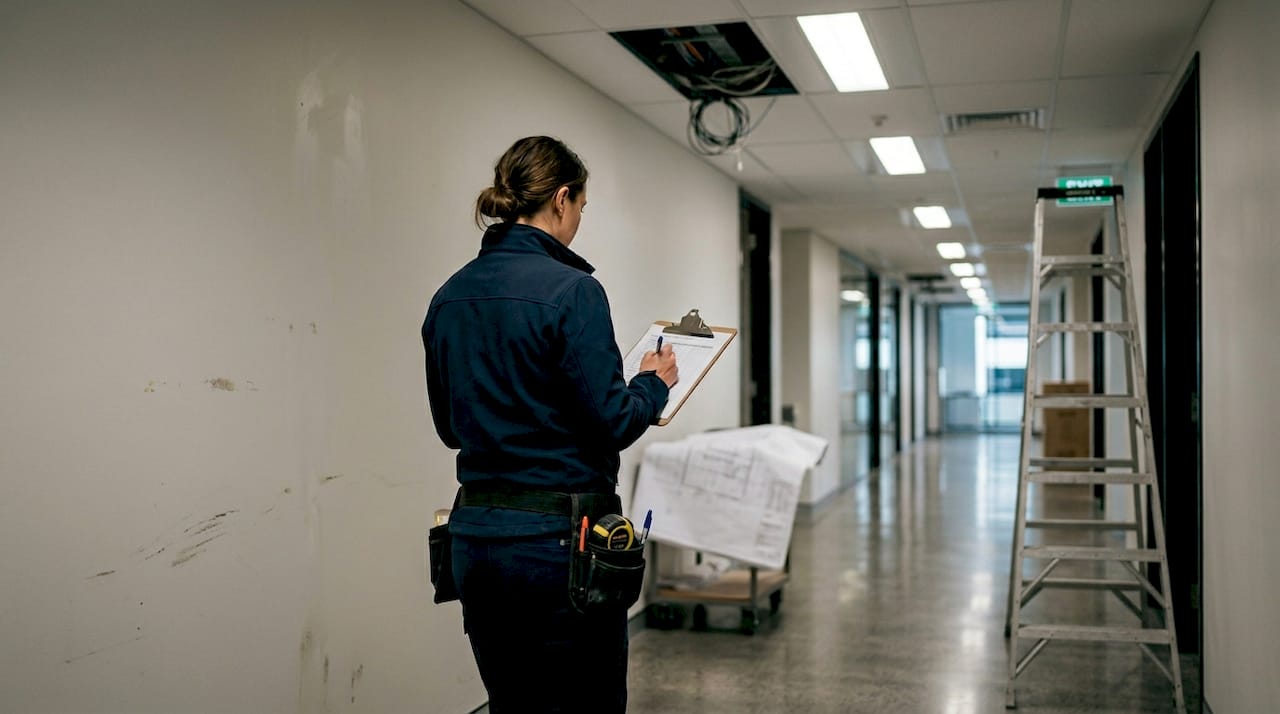
Quality assurance in commercial construction is not a single event at the end of the project. It’s a continuous process built into every stage. The building compliance process makes clear that permit sign-off and compliance checks are essential for lawful completion, and Auckland Council takes this seriously.
Key quality and compliance steps to complete before handover:
Inspection records — Maintain a complete log of all council and independent inspections throughout the build.
As-built drawings — Ensure your contractor provides accurate as-built documentation for all civil, structural, and services work.
Producer statements — Collect producer statements from engineers confirming design and construction compliance.
Code Compliance Certificate (CCC) — Do not occupy or hand over the building until the CCC is issued.
Defects liability period — Confirm the defects liability period in your contract (typically 12 months) and document any defects identified at handover.
Warranties and manuals — Collate all manufacturer warranties, maintenance manuals, and service agreements.
Pro Tip: Schedule a formal walkthrough with your contractor, project manager, and end user at least two weeks before the planned handover date. This gives you time to address defects without the pressure of a hard handover deadline. A post-build review meeting, held 30 days after occupation, is also worth building into your project programme.
Documentation is often treated as an afterthought, but it’s your legal protection if disputes arise after handover. Keep everything in a single, organised project file.
The uncomfortable truth most Auckland commercial builders won’t tell you
Having covered all the essential steps, here’s some hard-earned perspective that typical guides overlook.
Most commercial construction guides are written with Sydney or Melbourne in mind and then lightly adapted for New Zealand. The problem is that Auckland’s regulatory environment, ground conditions, and contractor market are genuinely different. What works in a mature, high-volume construction market doesn’t always translate here.
Auckland has a smaller pool of experienced commercial civil contractors than most developers expect. When the market is busy, the best contractors are booked out six to twelve months in advance. Waiting until your consents are approved to start contractor conversations is too late. The developers who consistently deliver on time start those conversations during the design phase.
Permit delays are also more common than the official processing timeframes suggest. Complex applications, requests for further information, and council workload all contribute to real-world timelines that exceed the statutory minimums. Build buffer time into your programme from day one, not as a last resort.
For a grounded view of how Auckland construction insights translate into practical project decisions, talking to contractors who work here every day is more valuable than any generic framework.
Partnering with Auckland experts for your next commercial build
If you’re planning a commercial build or hitting project snags, local expertise makes a measurable difference.
Bromley Group Ltd works with Auckland property developers, commercial project managers, and property owners on the civil works that underpin successful commercial builds. From Auckland earthworks and site preparation through to drainage solutions and subdivision civil works, our team understands Auckland’s ground conditions, council requirements, and the practical realities of delivering civil infrastructure on time. If you want civil works done right the first time, with a team that knows Auckland’s requirements inside out, get in touch with Bromley Group to discuss your project.
Frequently asked questions
What permits are required for commercial construction in Auckland?
You will typically need a resource consent for zoning and land use, plus a building consent for the structure, with specific requirements set by Auckland Council based on your site and project type.
What is early contractor involvement (ECI) and why is it used?
ECI means engaging your contractor during the design phase for constructability input, which can improve programme certainty on complex builds, though it requires careful scope management to avoid cost and withdrawal risks.
How much contingency should I budget for a commercial project?
Plan for 10 to 15 per cent of your total construction budget as contingency to cover ground condition surprises, consent variations, and scope adjustments common in Auckland projects.
What are the most common mistakes in Auckland commercial builds?
Permit delays, late design changes, and poor contractor selection are the most frequent issues; address them with early planning, a frozen design scope, and a contractor who knows Auckland’s requirements well.
Recommended