
How to manage civil works projects effectively in Auckland
- Jay Price
- Mar 13
- 7 min read

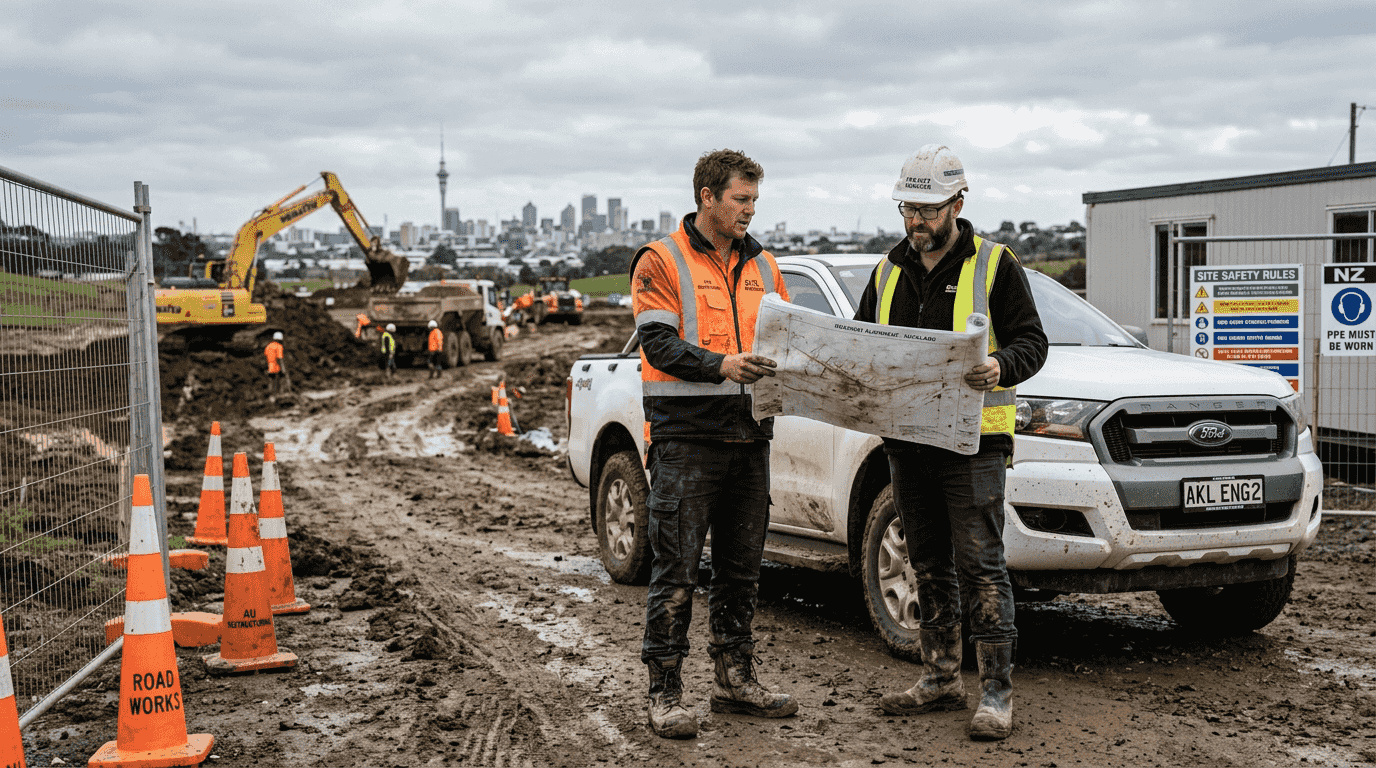
Managing civil projects in Auckland presents unique challenges from earthworks and drainage to concrete construction. Property developers and construction managers regularly face cost overruns, regulatory delays, and documentation complexities that can derail even well-planned developments. This comprehensive guide provides structured approaches to successfully deliver earthworks, drainage, and concrete construction projects while meeting Auckland Council requirements and staying on budget.
Table of Contents
Key takeaways
Point | Details |
Structured planning reduces overruns | Effective project management cuts cost overruns by 15-20% and improves timelines by 10-15%. |
Risk management prevents delays | Proactive risk mitigation strategies reduce delays and cost escalations by 25-30%. |
As-built documentation ensures approval | Auckland Council requires compliant as-builts before accepting asset ownership. |
Adaptive management improves flexibility | ESCAMP plans allow ongoing monitoring and adjustment for earthworks and erosion control. |
Clear communication drives success | Regular stakeholder updates and transparent reporting prevent misunderstandings and maintain project momentum. |
Preparing your civil works project for success
Successful civil works delivery starts well before any machinery arrives on site. Detailed preparation covering earthworks scope, drainage specifications, and concrete requirements forms the foundation of efficient project execution.
Begin with comprehensive project planning that maps every phase from site establishment through to final handover. Your plan should detail excavation depths, drainage network layouts, concrete pour schedules, and resource allocation across all trades. Structured project management demonstrates a 15-20% reduction in cost overruns and 10-15% improvement in delivery timelines when properly implemented.
Risk assessment identifies potential hazards before they become costly problems. Evaluate site-specific challenges including:
Ground conditions and contamination risks requiring soil testing
Existing services and infrastructure that could impact excavation
Weather patterns affecting earthworks and concrete pours
Access constraints for machinery and material deliveries
Neighbour considerations and noise management requirements
Understanding Auckland’s regulatory landscape prevents approval delays. Your project requires coordination with Auckland Council for resource consents, building consents, and engineering approvals. Producer Statements from chartered professional engineers verify design compliance at critical stages. Early engagement with council planners and engineering teams smooths the approval pathway and identifies documentation requirements upfront.
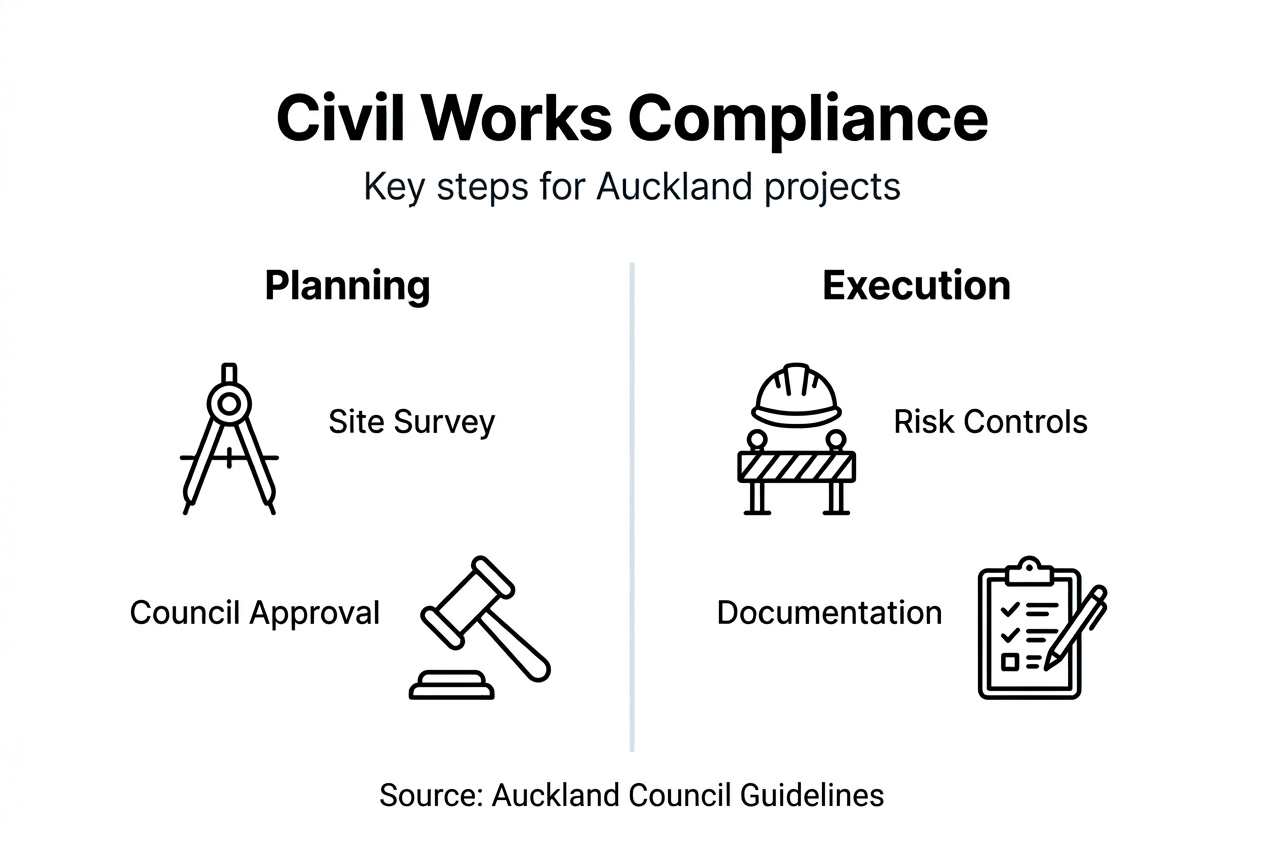
As-built documentation standards demand attention from project inception. Auckland Council requires as-builts in NZVD2016 format to integrate assets into GIS systems and verify engineering standards compliance. Establish survey control points early and maintain accurate records throughout construction. Streamlining project management processes includes setting up documentation workflows that capture as-built information progressively rather than retrospectively.
Pro Tip: Schedule your pre-start meeting with Auckland Council’s engineering team at least four weeks before breaking ground. This session clarifies specific documentation requirements for your project and prevents costly rework during the approval process.
Executing civil works efficiently and safely
Transitioning from planning to active construction requires systematic implementation of your risk mitigation strategies and adaptive management protocols. Earthworks execution demands particular attention to erosion and sediment control measures that protect neighbouring properties and waterways.
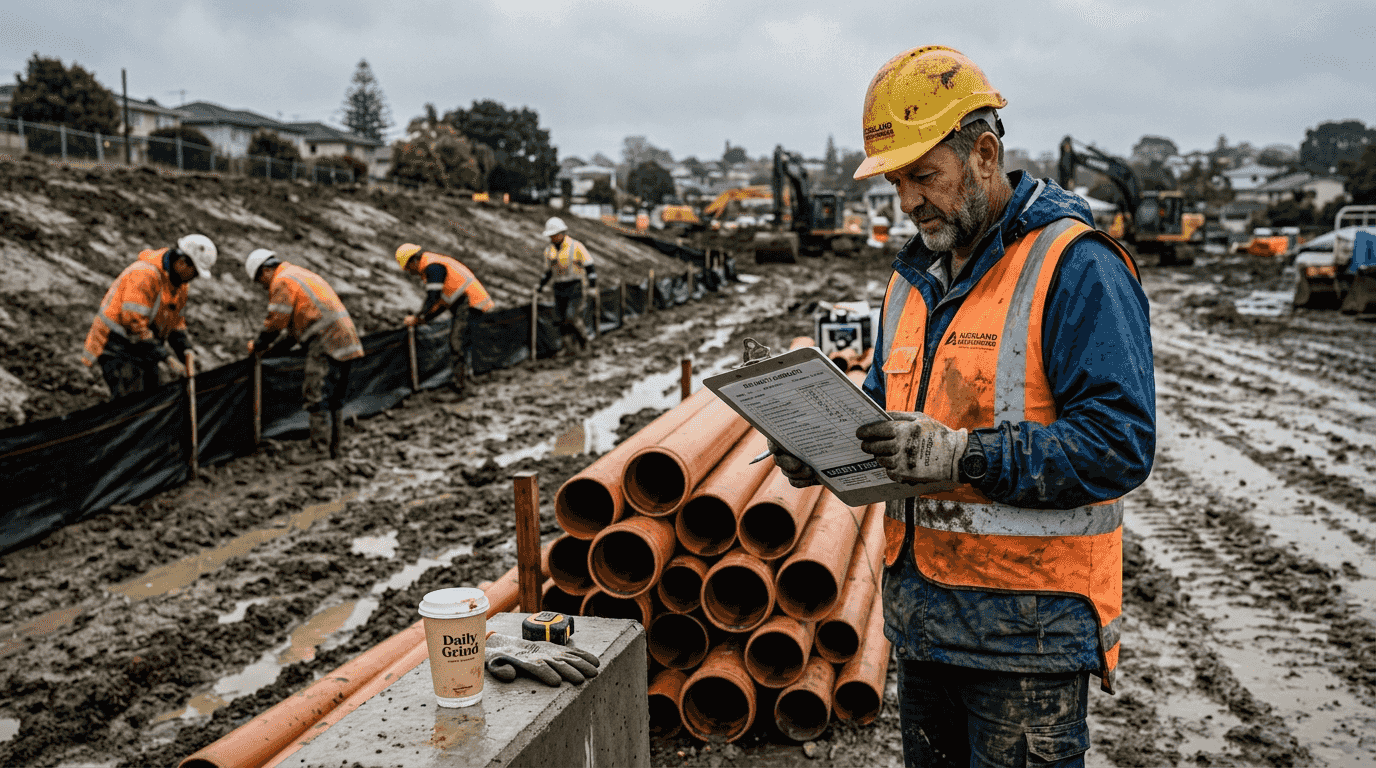
Implement your ESCAMP adaptive management plan from day one of earthworks. This framework provides flexibility to adjust erosion control measures based on site conditions and weather events. Regular monitoring allows you to modify silt fences, sediment ponds, and stabilisation measures as excavation progresses. Projects using adaptive management for earthworks maintain environmental compliance while responding to real-time site challenges.
Resource allocation and task scheduling prevent bottlenecks that extend project timelines. Coordinate earthworks completion with drainage installation readiness to avoid idle crews and equipment. Sequence concrete pours to maximise formwork reuse and minimise material waste. Your construction programme should identify critical path activities where delays cascade through subsequent phases.
Safety protocols protect your team and maintain project momentum. Establish clear procedures for:
Daily toolbox talks covering specific hazards for that day’s activities
Excavation edge protection and trench shoring inspections before personnel entry
Traffic management around active concrete pours and material deliveries
Utility location verification before any ground disturbance
Weather monitoring for earthworks stability and concrete curing conditions
Quality inspections at defined hold points verify work meets specifications before progressing to subsequent stages. Inspect compaction levels after each earthworks lift using density testing. Verify drainage pipe bedding and surround materials before backfilling. Check reinforcement placement and concrete slump before each pour commences.
“Projects with proactive risk management experience 25-30% fewer delays and cost escalations compared to reactive approaches that address issues only after they emerge.”
Client communication strategies maintain transparency throughout construction. Weekly progress reports with photos document achievements and flag emerging challenges early. When variations arise from unforeseen ground conditions or design modifications, present options with cost and time implications clearly. Clients appreciate honest communication about challenges more than discovering problems at project completion.
Pro Tip: Photograph every stage of drainage installation before backfilling. These images become invaluable for as-built documentation and resolving any future questions about pipe locations or junction details.
Verifying compliance and finalising your civil works project
Project closeout demands the same rigour as construction execution. Compliance verification through as-built documentation, peer reviews, and regulatory sign-offs ensures your development meets all legal and quality requirements.
Producer Statements serve specific functions in the approval pathway. PS1 Design Review statements verify design compliance with Building Code requirements before construction. PS3 Construction Review statements confirm the constructed works match approved designs and meet performance standards. Building Consent Authorities express concern about alterations to Producer Statements affecting Code Compliance Certificate applications, so ensure your engineer provides original, unmodified statements that accurately reflect project scope.
Document Type | Purpose | Timing | Responsible Party |
As-built drawings | Record final constructed positions and levels | Within 3 months of practical completion | Licensed surveyor |
Producer Statement PS3 | Verify construction compliance | Before CCC application | Chartered professional engineer |
Test certificates | Confirm material and workmanship standards | During and after construction | Testing laboratories and contractors |
Operation and maintenance manuals | Guide future asset management | At handover | Contractor and suppliers |
Submit final as-built documentation meeting NZVD2016 standards and Auckland Council’s format requirements. Your submission package typically includes:
Survey plans showing constructed levels, positions, and dimensions
Drainage as-builts with invert levels, pipe materials, and connection details
Concrete element locations including footings, slabs, and structural members
Geotechnical test results and compaction certificates
Material compliance certificates and product specifications
Auckland Council will not accept asset ownership until as-builts have been received, checked, and approved. This requirement delays title issuance for subdivisions and prevents final code compliance certificates for buildings. Plan for a four to six week review period after submission before receiving approval.
Peer reviews provide independent verification that works meet engineering standards. Engage a separate chartered professional engineer to review critical elements like retaining wall designs, structural concrete, and stormwater management systems. This review identifies any non-conformances requiring remediation before final sign-off.
Quality assurance documentation demonstrates compliance with your project Quality Plan and Code of Practice requirements. Maintain comprehensive records including:
Daily site diaries recording weather, activities, and visitors
Non-conformance reports and corrective action records
Material delivery dockets and batch plant certificates
Photographic evidence of work progression and completed elements
Pro Tip: Request as-built survey pickups progressively as construction phases complete rather than waiting until project end. This approach spreads survey costs across the project timeline and captures accurate information before site conditions change.
Understanding civil construction projects in New Zealand’s regulatory environment helps you anticipate compliance requirements from project inception. Working with experienced subdivision civil contractors who understand Auckland Council’s specific documentation standards accelerates the approval process and prevents costly documentation rework.
Partner with Auckland’s expert civil contractors for your next project
Managing civil works effectively requires technical expertise, regulatory knowledge, and proven project delivery systems. Bromley Group brings all three to your Auckland development project.
Our earthworks contractors handle everything from bulk site cuts to precise finished levels for building platforms. We implement adaptive management plans that maintain environmental compliance while delivering efficient excavation and earthmoving. Our drainage contractors install stormwater and wastewater systems meeting Auckland Council standards with full as-built documentation. From small residential connections to subdivision reticulation networks, we ensure your drainage infrastructure receives regulatory approval.
Our concrete contractors deliver driveways, foundations, retaining walls, and car parks built to specification and on schedule. We coordinate all elements of your civil project to prevent delays and maintain budget control. Every project receives dedicated project management with clear communication and transparent progress reporting.
Request a quote today and discover how Bromley Group’s experience managing Auckland civil works projects delivers your development on time, within budget, and to full regulatory compliance.
Frequently asked questions
What are the key phases in managing civil works projects?
Civil works management follows three critical phases: preparation including planning, risk assessment, and regulatory coordination; execution covering earthworks, drainage, and concrete construction with ongoing quality control; and verification through as-built documentation, peer reviews, and council approvals. Each phase builds on the previous one, requiring thorough completion before progressing.
What compliance documentation does Auckland Council require?
Auckland Council requires as-built drawings in NZVD2016 format showing final constructed positions and levels, Producer Statements from chartered professional engineers verifying design and construction compliance, material test certificates, and compaction reports. Submit these documents within three months of practical completion to enable asset acceptance and Code Compliance Certificate issuance.
How does adaptive management improve earthworks projects?
Adaptive management through ESCAMP plans provides flexibility to adjust erosion and sediment control measures based on observed site conditions and weather events. Rather than rigid predetermined controls, you monitor effectiveness and modify silt fences, sediment ponds, and stabilisation as excavation progresses. This responsive approach maintains environmental compliance while adapting to real-world construction challenges.
Why is client communication critical during civil construction?
Clear client communication prevents misunderstandings about progress, manages expectations around variations, and maintains project momentum through transparent reporting. Weekly updates with photographic evidence document achievements and flag emerging challenges early, allowing collaborative problem solving before issues escalate. Clients who understand project realities become advocates rather than obstacles when challenges arise.
What are common challenges in civil works project delivery?
Common challenges include unforeseen ground conditions requiring design modifications, weather delays affecting earthworks and concrete pours, utility conflicts discovered during excavation, documentation non-conformances delaying approvals, and resource coordination bottlenecks between trades. Proactive risk management, adaptive planning, and experienced project leadership minimise these impacts on timeline and budget.
How long does as-built documentation approval take?
Auckland Council typically requires four to six weeks to review and approve as-built documentation after submission. This timeframe assumes your drawings meet NZVD2016 standards and include all required information. Incomplete or non-compliant submissions return for correction, extending the approval period by several additional weeks and delaying title issuance or Code Compliance Certificates.
Recommended