
Residential earthworks explained: processes and Auckland guidelines
- Jay Price
- 16 hours ago
- 8 min read

TL;DR:
Residential earthworks are precise processes involving excavation, filling, and compaction for structural safety.
Proper planning, consent, and regulatory compliance are crucial to avoid costly delays and environmental issues.
Expert guidance and detailed testing enhance project success and help navigate Auckland’s complex terrain and regulations.
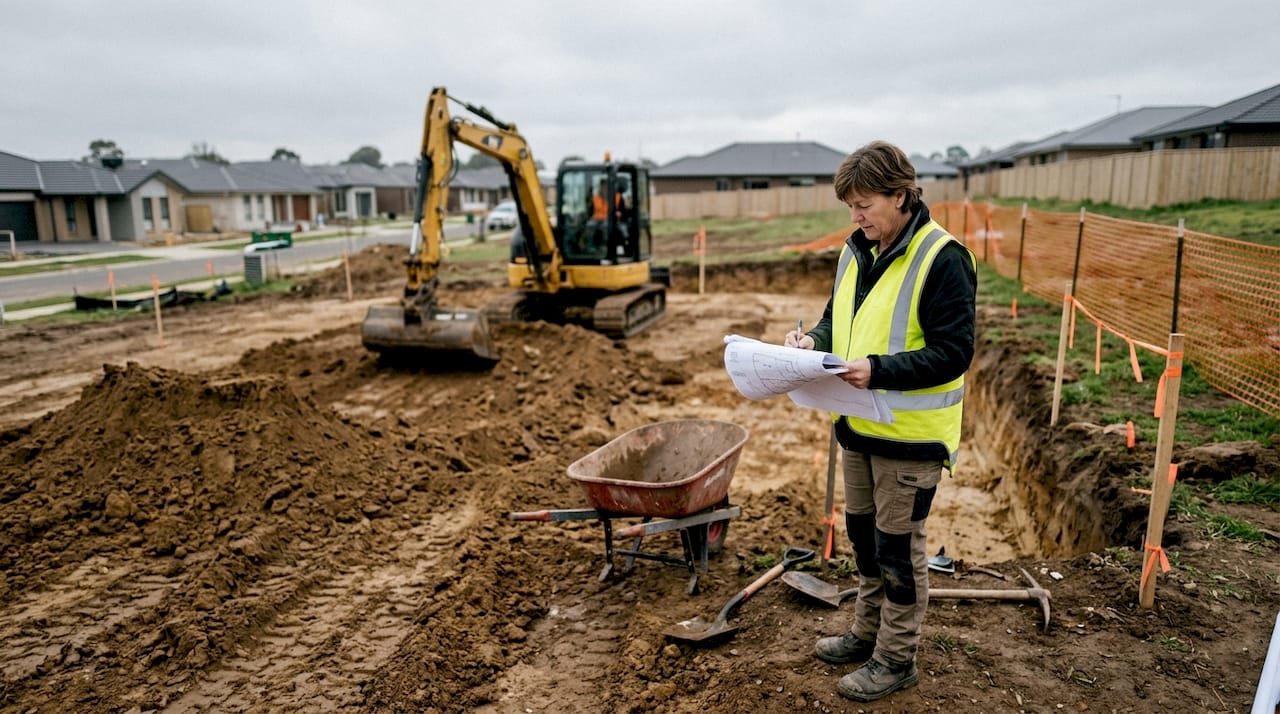
Most people assume residential earthworks is just digging a big hole and moving dirt around. It isn’t. Earthworks is a precise, regulated discipline that determines whether your structure stands safely for decades or becomes an expensive liability. From soil compaction testing to sediment control and council consents, every stage carries real consequences for your project timeline, budget, and structural integrity. Whether you’re a property developer planning a subdivision, a builder preparing a site cut, or a homeowner starting a new build, understanding what residential earthworks actually involves will save you from costly surprises before the first machine rolls onto your site.
Table of Contents
Key Takeaways
Point | Details |
Precision matters | Accurate earthworks are essential for safety, compliance, and successful project delivery. |
Follow Auckland rules | Earthworks in Auckland must meet council and environmental requirements, especially around erosion control. |
Plan for costs | Early budgeting and understanding of methods help avoid costly surprises during residential earthworks. |
Trust the experts | Getting professional advice early saves time, money, and reduces construction risk. |
What is residential earthworks?
Residential earthworks refers to any process that changes the shape or condition of land to prepare it for construction. This includes excavation, filling, grading, and compaction. It’s the foundational work that every structure, driveway, retaining wall, and drainage system depends on. Get it wrong, and everything built on top of it is compromised.
Understanding earthworks terminology is a good starting point, because the language used on site and in consent documents matters. Terms like “cut-and-fill,” “bearing capacity,” and “compaction ratio” aren’t just jargon. They describe specific technical requirements that affect both safety and compliance.
A typical residential earthworks project moves through several distinct stages:
Site assessment: Geotechnical investigation, topography mapping, and soil classification to understand what you’re working with before any machinery arrives.
Clearing and stripping: Removal of vegetation, topsoil, and any existing structures or debris from the work zone.
Cut-and-fill operations: Excavating high areas and redistributing material to fill low areas, balancing the site to the required design levels.
Compaction: Layered placement and mechanical compaction of fill material, tested using nuclear density or plate bearing methods to verify structural suitability.
Drainage installation: Subsoil and surface drainage systems designed to manage water movement across and beneath the site.
Erosion and sediment control: Physical measures such as silt fences, sediment traps, and stabilised access points to protect waterways and neighbouring properties.
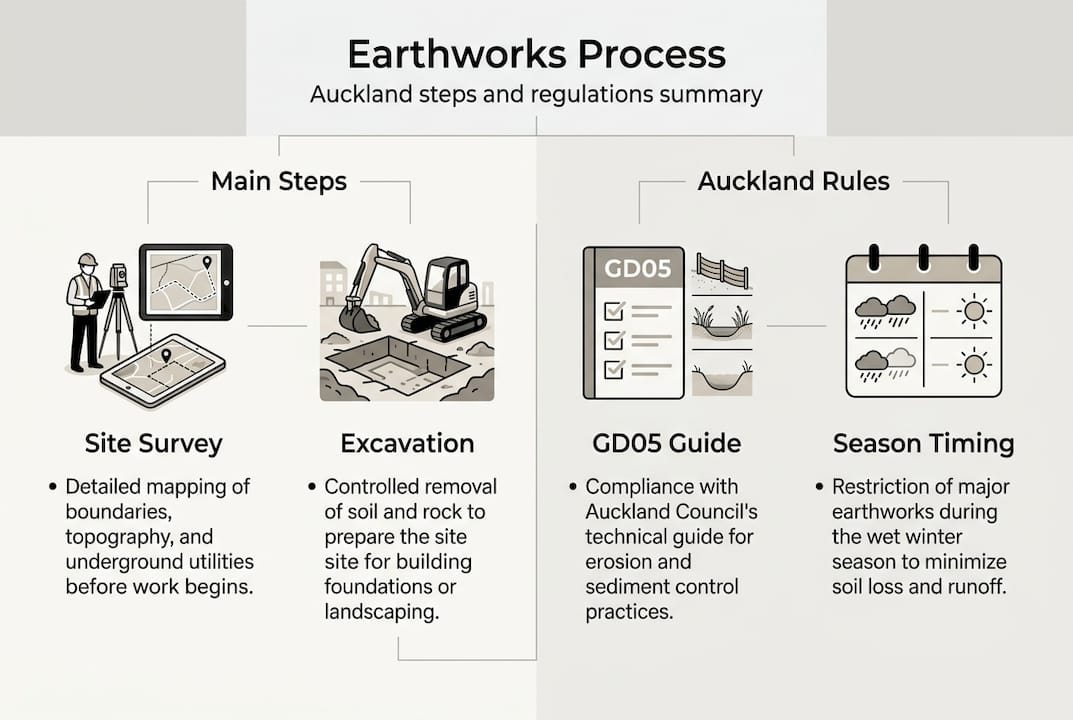
According to Auckland Council’s guidance, key methodologies include site assessment, topography mapping, cut-and-fill balancing using GPS and laser levelling, layered compaction with nuclear density or plate bearing testing, erosion and sediment control per GD05 guidelines, and staged works during the October to April season to minimise environmental impact.
“Precision in earthworks isn’t optional. Every stage from compaction testing to drainage design directly affects structural performance and your ability to meet consent conditions. Skipping steps to save time almost always creates far greater costs later.” — Bromley Group Ltd
For a broader look at what’s involved, the Auckland earthworks guide covers the full scope of what Auckland developers and builders need to understand before breaking ground.
Key steps in the residential earthworks process
Knowing what earthworks involves is one thing. Understanding the sequence of steps and why each one matters is what separates projects that run smoothly from those that stall mid-build.
Here’s what a well-managed residential earthworks project looks like from start to finish:
Geotechnical assessment and planning: A qualified engineer assesses soil type, bearing capacity, groundwater levels, and slope stability. Topography mapping and cut-and-fill balancing using GPS and laser levelling are completed at this stage to establish accurate design levels.
Consent and approvals: Resource consent applications are lodged with Auckland Council. Works cannot legally begin on most sites without this approval in place.
Site clearing: Vegetation, topsoil, and any demolition material are removed and managed in accordance with consent conditions and environmental requirements.
Cut-and-fill earthworks: Excavators and graders reshape the land to design levels. Material is either reused on site or removed, depending on soil suitability and volume calculations.
Compaction and testing: Fill is placed in controlled layers and compacted using heavy rollers or plate compactors. Nuclear density or plate bearing testing confirms each layer meets the required compaction ratio before the next layer begins.
Drainage installation: Subsoil drains, stormwater connections, and surface grading are installed to manage water flow and prevent ponding or erosion beneath finished surfaces.
Erosion and sediment control: Silt fences, rock check dams, and stabilised entry points are maintained throughout the project and removed only after vegetation is re-established.
Site handover: A final inspection confirms the site meets design levels, compaction requirements, and council conditions before construction begins.
For more detail on what happens before the earthworks machinery arrives, site preparation essentials is worth reviewing with your contractor.
Pro Tip: Invest in professional surveying and compaction testing at every stage. These aren’t optional extras. They’re the documentation that protects you from rework, consent issues, and structural liability down the track.
Compliance, environmental controls, and Auckland-specific regulations
Auckland’s regulatory environment for residential earthworks is more demanding than many developers expect. The Auckland Unitary Plan sets out specific rules around earthwork volumes, proximity to waterways, slope gradients, and sediment control. Ignoring these requirements doesn’t just risk a fine. It can trigger a stop-work order that halts your entire project.
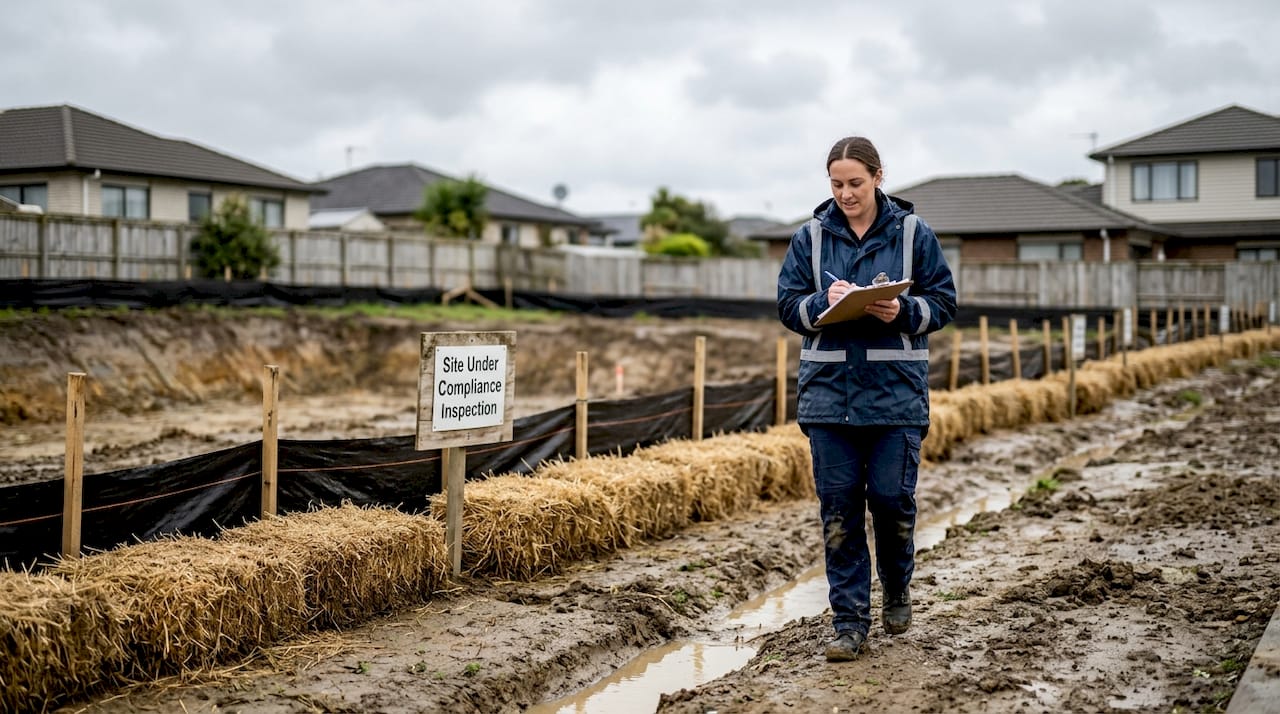
The GD05 erosion and sediment control guidelines and the October to April recommended earthworks season are vital for minimising environmental impact and remaining compliant on Auckland sites.
Compliance area | Requirement | Consequence of non-compliance |
Resource consent | Required for most residential earthworks | Stop-work order, fines, legal liability |
Sediment control | GD05 standards must be met throughout works | Council enforcement, waterway damage claims |
Compaction testing | Nuclear density or plate bearing at each layer | Structural failure, consent refusal |
Seasonal timing | October to April recommended period | Increased erosion risk, compliance breach |
Waterway setbacks | Minimum distances from streams and drains | Consent declined or conditions imposed |
Key environmental protections you need to have in place include:
Silt fences and sediment retention ponds installed before earthworks begin
Stabilised vehicle access points to prevent tracking of mud onto roads
Regular site inspections, particularly after rainfall events
Dust suppression measures during dry conditions
Progressive re-vegetation of disturbed areas as works are completed
Understanding earthworks cost factors early helps you budget for compliance measures, which are non-negotiable on Auckland sites. Reviewing best practices for land development alongside Auckland Council earthworks consents information gives you a complete picture before lodging any applications.
Comparing earthworks methods and costs for Auckland projects
Not all earthworks are done the same way, and the method you choose has a direct impact on cost, speed, and quality. Auckland’s varied terrain, from flat coastal sections to steep volcanic ridgelines, means the right method varies significantly from site to site.
Method | Best use case | Approx. cost range | Pros | Cons |
Manual excavation | Small, confined areas | High per cubic metre | Precision in tight spaces | Slow, labour intensive |
Mechanical excavation | Standard residential sites | Moderate | Fast, cost-effective at scale | Requires site access |
GPS/laser-guided earthworks | Large or complex sites | Higher upfront | Accuracy, less rework | Equipment and setup costs |
As Auckland Council guidance confirms, GPS and laser levelling and staged works can improve efficiency and cost-effectiveness when planned correctly on Auckland earthworks projects.
Beyond the method itself, several factors drive your overall earthworks cost:
Soil type: Rock, clay, and loose fill all behave differently and require different machinery and compaction approaches.
Site slope: Steeper sites require more cut-and-fill volume, retaining structures, and erosion controls.
Access: Narrow or restricted access increases equipment costs and limits the machinery options available.
Compaction and testing: Each layer of fill requires testing, and the number of layers depends on fill depth and soil type.
Regulatory requirements: Consent conditions can specify additional monitoring, reporting, or environmental measures that add to project cost.
For a detailed breakdown, reviewing earthworks costs in Auckland alongside tips for Auckland developers will help you build a realistic budget before engaging contractors.
Pro Tip: Early cost forecasting, done before consent is lodged, prevents budget blowouts and gives you leverage to make smarter design decisions while changes are still inexpensive.
What most guides miss about residential earthworks in Auckland
Most articles on residential earthworks focus on process and compliance. What they rarely address is the human side of where projects actually go wrong.
Auckland’s geology is genuinely unpredictable. Volcanic soils, expansive clays, and perched groundwater tables can all behave very differently from what a desktop assessment suggests. We’ve seen sites where the geotechnical report gave a clean bill of health, but the first machine on site uncovered conditions that required a complete redesign of the foundation approach. That’s not a failure of process. It’s a reality of working in Auckland’s varied landscape.
The other issue we see consistently is communication breakdown between landowners and contractors. Assumptions get made on both sides. Scope creep happens. Consent conditions get misread. The result is delays, disputes, and costs that nobody budgeted for.
Paying for early expert input, whether that’s a geotechnical engineer, a civil designer, or an experienced earthworks contractor, saves exponentially more than it costs. Reviewing more tips for developers before you start is a practical first step. DIY earthworks on anything beyond a minor garden reshaping is a risk that rarely pays off when project success is genuinely at stake.
Expert help for your next Auckland residential earthworks project
Residential earthworks done properly protects your investment, keeps your project on schedule, and keeps you on the right side of Auckland Council. Done poorly, it creates structural problems, compliance headaches, and costs that compound quickly.
Bromley Group Ltd brings local Auckland expertise and end-to-end capability to residential earthworks projects of all sizes. From initial site assessment and consent support through to compaction testing, drainage, and final handover, we manage the full scope so nothing falls through the cracks. Our team works directly with property developers, residential builders, and property owners across Auckland. If you’re ready to move forward, speak with our Auckland earthworks contractors or request a quote today.
Frequently asked questions
What is included in residential earthworks?
Residential earthworks cover site assessment, excavation, cut-and-fill, compaction, drainage, and erosion control to prepare land safely and compliantly for construction.
When is the best time to complete residential earthworks in Auckland?
The recommended period is October to April, as works staged during this season reduce environmental impact and align with Auckland Council compliance guidelines.
Do I need a consent for residential earthworks in Auckland?
Yes, land use resource consent is required for most residential earthworks in Auckland, so check site-specific rules with Auckland Council before commencing any works.
What are the top mistakes to avoid with residential earthworks?
The most common mistakes are skipping compaction, drainage, and erosion controls, which are key compliance areas under Auckland Council’s earthworks requirements.
Recommended