
Key earthworks cost factors for Auckland projects
- Jay Price
- 7 days ago
- 8 min read

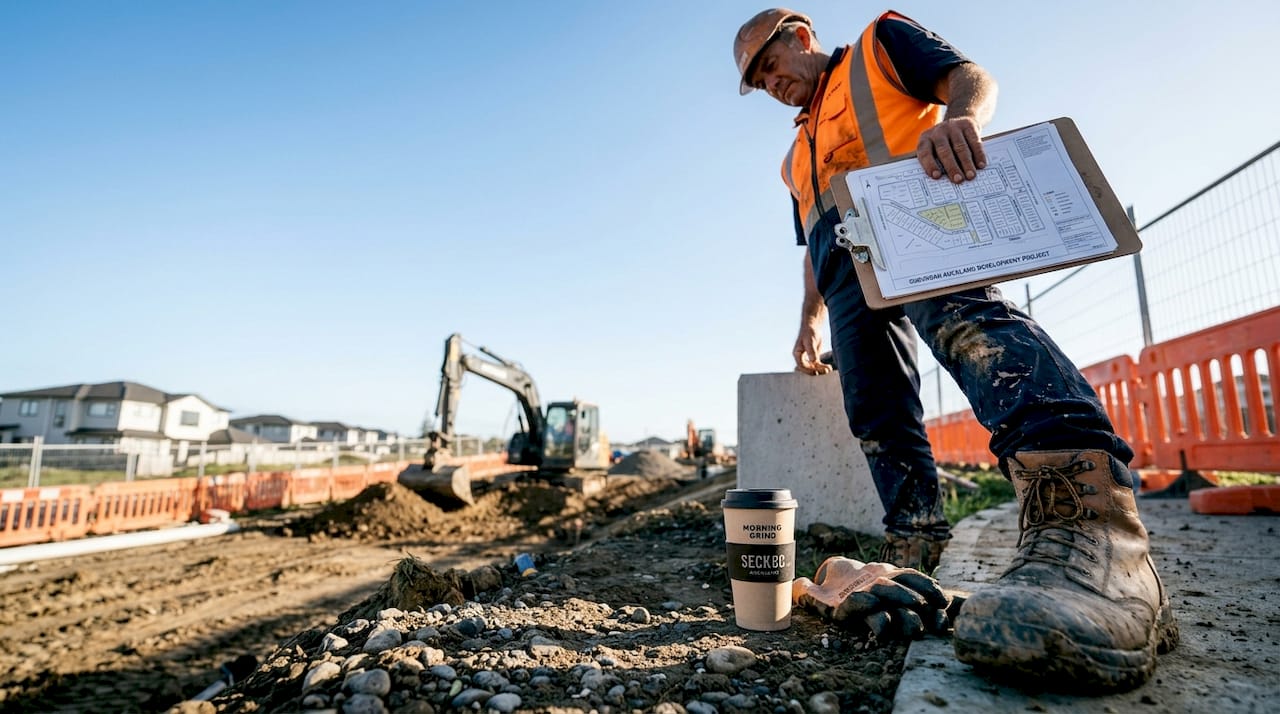
Budgeting for earthworks in Auckland is genuinely different from anywhere else in New Zealand. The combination of volcanic terrain, clay-heavy soils, steep topography, and a regulatory environment that demands detailed erosion and sediment controls means that site-specific risks consistently outweigh generic national benchmarks. For property developers and commercial contractors, this gap between expectation and reality is where budgets get hurt. This guide breaks down the real cost drivers, from geotechnical investigation through to compliance surcharges, so you can build a more accurate picture before you commit to a project programme.
Table of Contents
Key Takeaways
Point | Details |
Early site investigation | Investing in geotech and a defined scope prevents costly surprises during earthworks. |
Cut/fill management | Accurate balancing reduces expensive material import, export, and disposal fees. |
Auckland regulations | Local compliance, weather and terrain can make costs much higher than the national average. |
On-site reuse benefits | Reusing cut material on-site typically lowers logistics charges and environmental impact. |
Site investigation and project scope
Every earthworks budget starts with what you know about the ground beneath your feet. The less you know, the more you pay, and that is not an exaggeration. A robust geotechnical investigation carried out before pricing can reveal ground conditions, contamination risks, groundwater depth, and bearing capacity, all of which directly affect excavation methods, material handling, and timeframes.
Early geotech investigation and cut/fill balancing are widely recognised as the most effective tools for avoiding cost overruns. Yet many developers treat geotech as an optional upfront expense rather than a risk-management investment. That thinking routinely costs far more later.
The key scope factors that shape your earthworks budget include:
Ground conditions: Rock, clay, fill, or contaminated material each require different plant, methods, and disposal pathways
Groundwater: High water tables require dewatering, which adds plant costs, time, and compliance obligations
Extent of cut and fill: The ratio of cut to fill determines whether you import, export, or reuse material on site
Site size and access: Tight urban sites in Auckland restrict plant movement, slowing production rates and increasing cost per cubic metre
Contamination: Former industrial sites or land near fuel storage may trigger costly remediation requirements
Topography: Steep or irregular sites increase cut volumes and retaining requirements significantly
Changing scope mid-project is one of the most reliable ways to blow a budget. When the design changes after earthworks have commenced, you are often paying for double handling, re-mobilisation, and revised consent conditions.
Understanding Auckland earthworks essentials before you engage a contractor gives you a much stronger foundation for reviewing quotes critically. Similarly, reviewing site preparation steps early in the design phase helps align your engineer, surveyor, and contractor before costs are locked in.
Pro Tip: Before finalising your project scope, sit down with your geotechnical engineer and civil designer together. Ask them to walk through the cut/fill balance, identify the top three ground risk items, and confirm what contingency allowance is built into the estimate for each.
Cut and fill volumes: Modelling and material management
Once your scope is defined, the earthworks quantity model becomes the financial backbone of your project. How much material you move, and where it goes, drives the largest single cost line in most civil construction budgets.
Volume estimation is typically performed using one of two methods:
Grid method: The site is divided into a grid, with existing and proposed levels recorded at each grid point. Volume is calculated from the difference between existing and finished surface levels across each grid cell.
Cross-section method: Profiles are taken at regular intervals across the site, and volumes are calculated between adjacent cross-sections using the average end area or prismoidal formula.
3D modelling software: Modern surveying tools generate digital terrain models that calculate volumes automatically, reducing human error and improving accuracy for complex sites.
Beyond raw volumes, two material behaviour factors dramatically affect your cost base.
Factor | What it means | Typical range |
Bulkage (swell) | Excavated material expands in volume once disturbed | 10 to 40% depending on material |
Shrinkage | Compacted fill occupies less volume than the loose material placed | Up to 50% for hardcore fill |
These factors mean your truck movements, tipping fees, and imported fill quantities can shift significantly from the initial estimate if they are not modelled correctly. A contractor quoting on loose cubic metres rather than compacted cubic metres, for example, can create a major discrepancy at final account.
The most cost-effective strategy is on-site reuse of cut material wherever possible. Reusing suitable cut material as engineered fill eliminates cartage costs in both directions, reduces tip fees, and lowers your project’s environmental footprint. Not all cut material is suitable for reuse, but a good contractor will test and classify material early to maximise what stays on site.
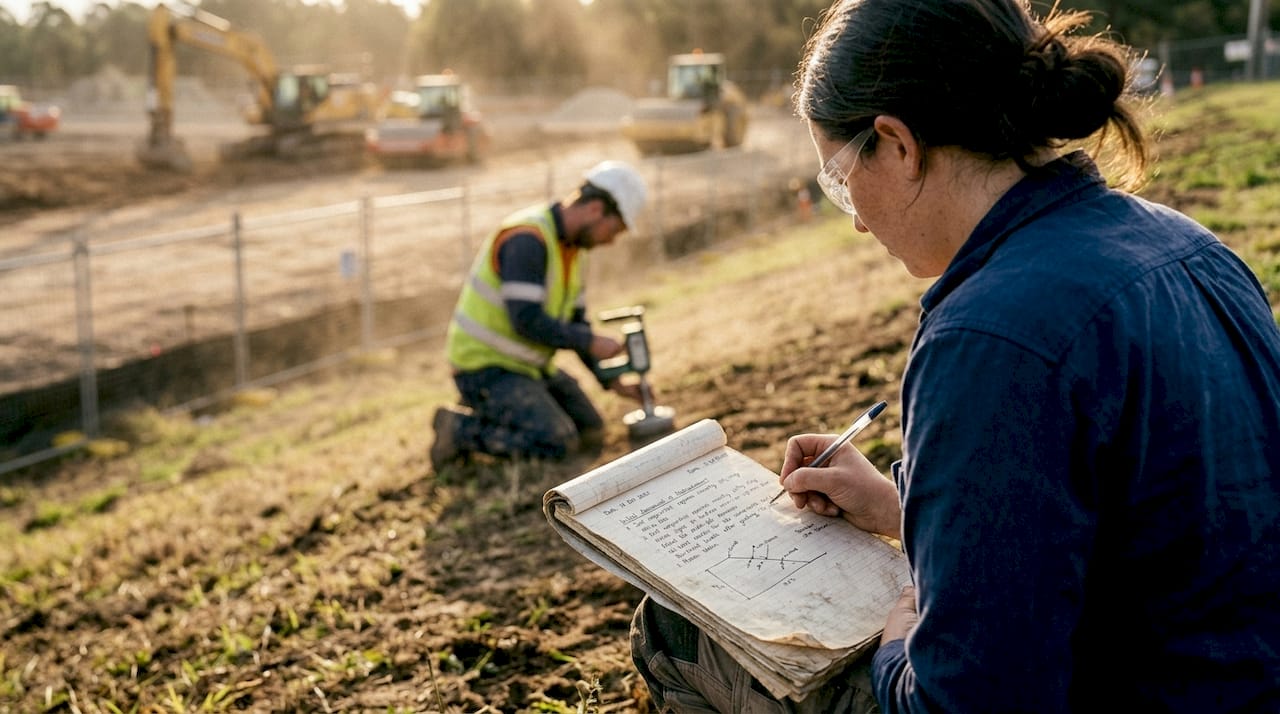
Familiarise yourself with cut/fill terminology so you can interrogate your quantity surveyor’s model with confidence. If you are pricing a larger site, our Auckland excavation services team can walk through the volume assumptions with you directly.
Pro Tip: Ask your quantity surveyor to provide the cut and fill volumes in both loose and compacted states, with swell and shrinkage factors clearly stated. If those factors are not shown, the model is incomplete.
Disposal, cartage, and reuse options
After estimating your volumes, what happens to all that spoil and imported fill? This is one of the biggest hidden cost leaks in Auckland earthworks, and it deserves its own serious attention.
On-site reuse is always the first preference. When cut material is classified as suitable fill, reusing it on site avoids cartage costs in both directions and reduces landfill dependency. Prioritising on-site reuse is standard best practice, but it requires early testing and coordination between your geotechnical engineer and contractor.
When material must leave the site, costs escalate quickly. A comparison of the main options:
Option | Typical cost drivers | Auckland considerations |
On-site reuse | Testing, compaction, classification | Most cost-effective where material is suitable |
Off-site cartage to fill site | Truck hire, fuel, travel distance | Limited receiver sites near urban Auckland |
Landfill disposal | Tipping fees, compliance documentation | Fees have increased significantly in recent years |
Contaminated soil disposal | Specialist contractor, manifest, licensed facility | Can multiply disposal costs by three to five times |
Beyond the base cartage and disposal rates, several additional charges catch developers off guard:
Double handling: Material moved twice on site due to sequencing or access constraints adds significant cost per cubic metre
Contaminated soil surcharges: Even minor contamination triggers specialist disposal requirements and documentation
Night works premiums: Urban Auckland sites often require off-peak trucking to comply with noise restrictions, attracting penalty rates
Oversize loads: Large rock or concrete debris may require special transport permits
Wet weather delays: Wet material is heavier, harder to handle, and may fail compaction testing, requiring re-work
“The disposal line item is where Auckland earthworks budgets most often blow out. Developers see a tipping fee per tonne and assume it is fixed, but the real cost includes transport, double handling, compliance documentation, and the time your plant sits idle waiting for trucks.”
Understanding what site works actually involves from a logistics standpoint helps you ask the right questions when reviewing contractor quotes.
Regulatory compliance and Auckland-specific surcharges
Managing material is just part of the puzzle. Auckland’s regulatory environment introduces its own layer of cost complexity that is not reflected in generic New Zealand earthworks benchmarks.
Auckland Council requires erosion and sediment control (ESC) measures on any earthworks site above a certain threshold. These controls, including silt fences, sediment retention ponds, and stabilised entry points, must be installed, maintained, and inspected throughout the works. The cost of ESC alone can represent a meaningful percentage of the total earthworks budget on larger sites.
Auckland’s regulations and terrain amplify site-specific risks well beyond what generic New Zealand job costing would suggest. Developers who use national cost-per-cubic-metre benchmarks without adjusting for Auckland conditions routinely find their budgets short.
Common compliance items that are overlooked in early budgets include:
Resource consent conditions: Specific monitoring, reporting, and inspection requirements tied to consent conditions add ongoing cost during construction
Groundwater monitoring: Required on some sites near waterways or in areas with high water tables
Dust suppression: Required in dry conditions, particularly on large open sites near residential areas
Reinstatement of road corridors: Council requirements for reinstating berms, footpaths, and kerbing after works
Consent variation fees: When scope changes require consent amendments, council processing fees and delays add cost
Seasonal weather surcharges: Auckland’s wet winters slow production rates and increase the cost of achieving compaction specifications
Reviewing an Auckland compliance checklist before you price a project is a practical way to avoid missing these line items. For larger projects, understanding effective project management principles helps you track compliance costs as the project progresses.
What Auckland developers get wrong about earthworks cost risks
After working across a wide range of Auckland civil projects, the pattern is consistent. Most cost overruns are not bad luck. They are the predictable result of underestimating site-specific factors and treating Auckland like a generic New Zealand job.
National benchmarks are a starting point, not a budget. The moment you apply a cost-per-cubic-metre rate from a flat Canterbury site to a steep, clay-heavy Auckland section with high groundwater, you have already introduced significant error into your budget. Experienced contractors do not price from benchmarks. They price from site conditions, and the difference can be substantial.
The second mistake is treating the geotechnical investigation as a cost to minimise. A single missed detail at the investigation stage, say, an undetected layer of soft material or a misclassified fill zone, can double your cartage and disposal line item once works commence. That is not a hypothetical. We have seen it happen.
Seasoned contractors assess risk quickly by looking at site access, topography, proximity to waterways, and the age and use history of the land. These are the real indicators of cost risk, and they are visible before a single bore hole is drilled. Browsing real Auckland earthworks experiences from contractors who work these sites regularly gives you a clearer picture of what to watch for.
Get a true cost estimate for your Auckland project
If this guide has made one thing clear, it is that accurate earthworks budgeting in Auckland requires local knowledge, not just spreadsheet formulas.
Bromley Group works with property developers and commercial contractors across Auckland to deliver earthworks estimates that reflect actual site conditions, compliance requirements, and material management realities. As Auckland earthworks specialists, we price from site, not from benchmarks. Whether you are planning a site cut, subdivision, or commercial development, you can request a quote and get a locally informed cost breakdown that you can actually build a budget around. Our subdivision infrastructure team is also available for larger staged projects requiring integrated civil planning.
Frequently asked questions
What is the single largest driver of earthworks costs in Auckland?
Cut and fill balance is the dominant factor. The cut/fill ratio determines whether material must be imported or exported, which directly drives cartage, disposal, and plant costs.
How can developers minimise earthworks overruns?
Commissioning early geotechnical investigation and prioritising accurate quantity surveys are the most effective steps. Early geotech work prevents most budget blowouts by surfacing ground risks before pricing is finalised.
Are Auckland’s earthworks cost benchmarks higher than other NZ regions?
Yes. Auckland’s site conditions and compliance requirements consistently push costs above generic New Zealand averages, sometimes significantly depending on terrain and regulatory obligations.
What’s the best way to find hidden line items in a quote?
Ask for a full breakdown of disposal, cartage, compliance, and contingency allowances with the supporting assumptions listed for each. Any quote that does not show these separately warrants further scrutiny.
Recommended