
Selecting sustainable construction materials for efficient builds
- Jay Price
- 1 day ago
- 7 min read

TL;DR:
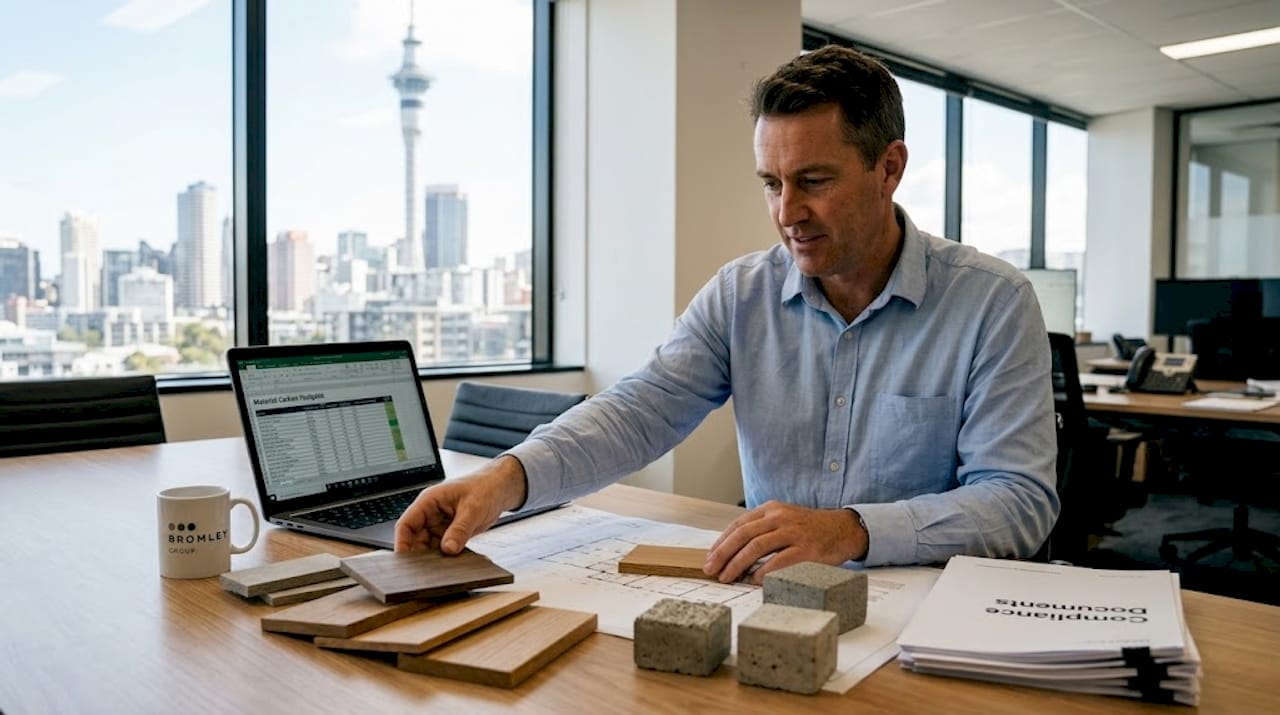
Material choices in Auckland must meet sustainability, seismic, moisture, and lifecycle performance criteria.
Local sourcing, durability, and compliance with rating systems are key to sustainable construction success.
System thinking and integrated design ensure long-term performance and environmental benefits.
Choosing construction materials in Auckland is more complex than most developers expect. It is not just about what meets the building code — materials must also satisfy sustainability rating systems, handle the region’s humidity and seismic risk, and deliver value across the full project lifecycle. Many experienced builders underestimate how much upfront material decisions shape long-term outcomes. This guide walks you through a practical, evidence-based framework for selecting sustainable materials that perform in Auckland’s unique environment and align with current compliance requirements.
Table of Contents
Why construction materials matter for sustainable and resilient projects
Key factors to consider when selecting materials in Auckland
Regulatory frameworks: Homestar, Green Star, and NZ standards
Integrating sustainability with performance over the project lifecycle
Our perspective on balancing efficiency, resilience and sustainability
How Bromley Group supports efficient, sustainable construction in Auckland
Key Takeaways
Point | Details |
Material choice drives outcomes | Smart selection impacts energy use, resilience, and compliance from day one. |
Balance performance and standards | Choose materials that satisfy regulatory, lifecycle, and site-specific demands. |
Local solutions offer real benefits | Opt for locally sourced, proven materials to minimise both risk and carbon footprint. |
Optimise the whole system | Don’t just substitute materials—adapt your design for Auckland’s environment and building lifecycle. |
Why construction materials matter for sustainable and resilient projects
Materials are the foundation of every performance outcome your project delivers. The right choice directly influences energy use, occupant comfort, and the total cost of ownership over decades. Get it wrong, and you pay for it in retrofits, compliance failures, and assets that age badly.
For Auckland projects targeting certification, embodied carbon reductions are now a material requirement for Green Star and Homestar compliance, not a nice-to-have. This means the sustainability conversation starts well before the first slab is poured.
Materials also define how your build performs in Auckland’s specific conditions: seismic resilience, moisture durability, and weathertightness are non-negotiable. Sustainability impacts extend from design right through to end-of-life, and smart developers factor this into decisions early. How you manage project delivery and materials at every stage shapes the final outcome.
“The most costly material decisions are not the ones that exceed budget — they are the ones that underperform over the asset’s lifetime.”
Core impacts to consider across every material choice:
Energy performance: Thermal mass, insulation value, and airtightness
Compliance: Homestar and Green Star embodied carbon requirements
Climate resilience: Seismic ductility, moisture resistance, and wind loading
Lifecycle cost: Maintenance burden, replacement cycles, and end-of-life recyclability
Site waste: Material efficiency and waste minimisation during construction
Key factors to consider when selecting materials in Auckland
Not all sustainability criteria carry equal weight. Selection factors span technical, economic, environmental, and social dimensions — and the balance between them shifts depending on your project type, site, and target rating.
Here is a quick comparison of commonly used materials across key criteria:
Material | Embodied carbon | Cost profile | Durability | Homestar/Green Star fit |
NZ timber | Low | Moderate | High (if treated) | Excellent |
Recycled concrete | Moderate | Low to moderate | Very high | Good |
Rammed earth | Very low | High (labour) | High | Good |
Standard concrete | High | Low | Very high | Conditional |
Sustainably sourced timber, recycled concrete, wool insulation, and rammed earth are all recognised in Homestar ratings, making them reliable starting points for most Auckland residential builds.
When comparing your options, prioritise in this order:
Technical: Structural strength, longevity, and suitability for site conditions
Economic: Upfront cost, lifecycle value, and maintenance burden
Environmental: Embodied carbon, recyclability, and sourcing transparency
Social: Occupant health, indoor air quality, and site safety
These priorities also support decisions around sustainable land development strategies and have downstream effects on earthworks costs and site planning.
Pro Tip: Always verify your specified materials against current BRANZ and NZGBC guidance before procurement. Requirements update regularly, and what passed compliance two years ago may not today.
Regulatory frameworks: Homestar, Green Star, and NZ standards
Auckland developers working toward certification need to understand what the rating systems actually require at the material level — not just in broad terms.
Homestar ratings assess EN3 (10 points) and HC7 (Healthy Materials), referencing products like NZ timber and recycled concrete. These credits reward low-toxicity, locally sourced options that reduce both embodied carbon and occupant health risks.
For Green Star, the bar is explicit: NZGBC and BRANZ calculators use the EN15978 A1 to A5 lifecycle stages to measure upfront embodied carbon. Upfront carbon must sit at least 10% below the reference building threshold to achieve certification.
Rating system | Key material credits | Embodied carbon target | Local sourcing benefit |
Homestar | EN3, HC7 | Required reduction | Yes, recognised |
Green Star | Materials category | 10% below reference | Streamlines approvals |
NZS 3604 | Timber framing | N/A | Preferred |
NZS 3604 governs timber framing and is the baseline for most residential structures. The B2 Durability clause also sets minimum performance requirements for materials exposed to New Zealand’s climate. Keeping an eye on Auckland project trends shows why local sourcing is increasingly favoured: it simplifies documentation and reduces supply chain risk.
Climate, durability, and site realities in Auckland builds
Auckland’s climate is deceptively demanding. The humidity is persistent, wind exposures vary sharply between sites, and seismic risk is real. Materials that perform in other parts of New Zealand can underdeliver here without proper assessment.
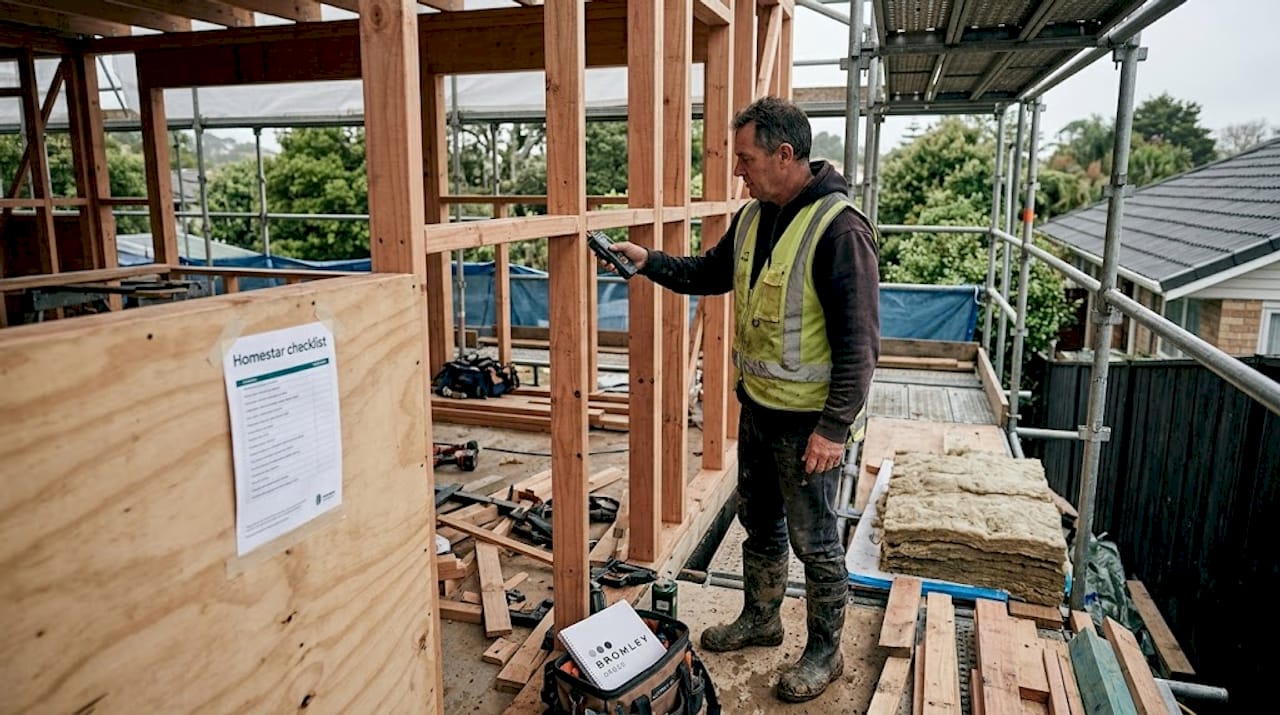
Weathertightness is critical in Auckland, and seismic resilience benefits from ductile materials such as engineered timber and reinforced concrete. These are not optional features — they are baseline expectations for any quality build. Moisture and fire resistance needs are also driving wider adoption of fibre cement cladding in the Auckland residential market.
Site waste is another overlooked factor. Construction and demolition waste accounts for roughly half of New Zealand’s total waste stream, making reduce, reuse, and recycle strategies both an environmental priority and a project cost lever.
Key site-specific risks to address in your material specification:
Moisture ingress: Demand full weathertightness testing and low air permeability ratings
Seismic loading: Specify ductile materials that absorb lateral forces without catastrophic failure
Wind exposure: Check cladding and roofing systems against local wind zone classifications
Construction waste: Build waste minimisation into procurement and install planning
Getting site preparation for durability right underpins everything. Your material choices and concrete construction methods need to work together from the ground up.
Pro Tip: Test all specified materials for both weathertightness and seismic suitability before finalising your schedule of materials. Energy ratings alone do not capture these risks.
Integrating sustainability with performance over the project lifecycle
The most common mistake in sustainable material selection is treating it as a one-time specification decision rather than a lifecycle strategy. Every choice you make at the design phase has compounding effects.
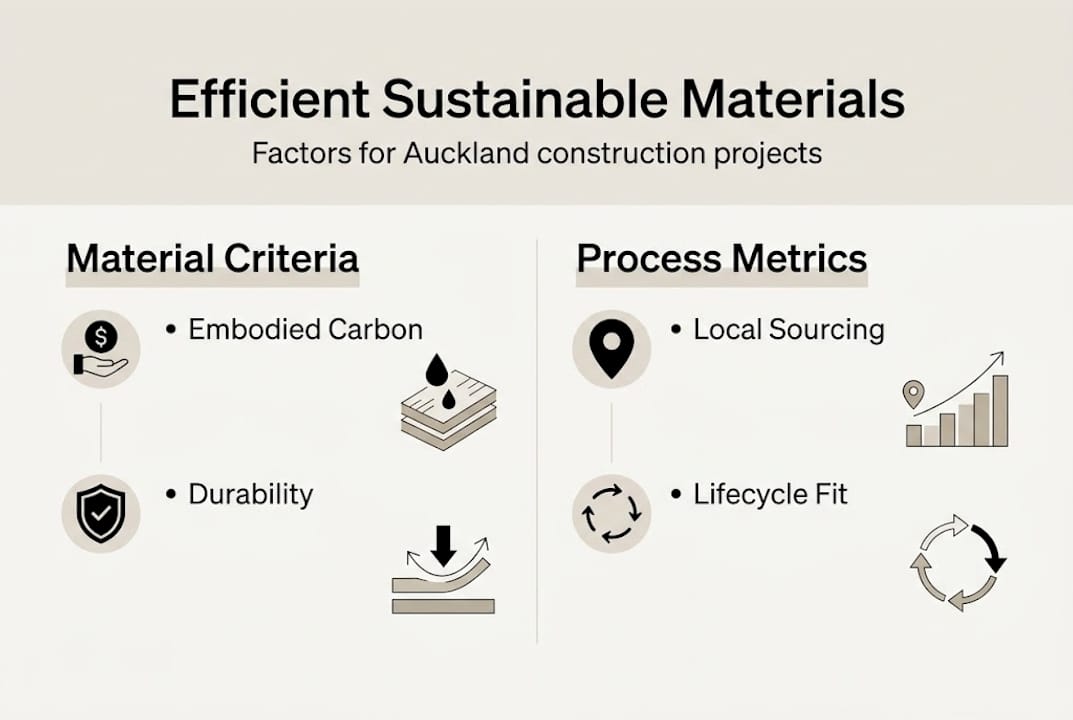
System optimisation and durability mean that high upfront energy materials like concrete are viable when they outlast alternatives by decades. It is not about swapping one material for another — it is about building systems that perform together.
Here is how material decisions play out across the project lifecycle:
Design phase: Specify materials that meet compliance, optimise thermal performance, and minimise embodied carbon
Construction: Prioritise efficient installation, low waste, and verified weathertightness detailing
Operation: Choose materials that reduce ongoing energy loads and maintenance costs
End-of-life: Factor in recyclability, disassembly potential, and material reuse pathways
“System optimisation, not just material swaps, drives real sustainability.”
This lifecycle lens is central to civil construction’s role in building New Zealand’s resilient infrastructure base.
Our perspective on balancing efficiency, resilience and sustainability
Conventional wisdom in sustainable construction often fixates on material substitution — swap concrete for timber, swap imports for locals — as if switching one product for another is enough. In Auckland, that thinking falls short.
New Zealand’s renewable energy advantage changes the calculus on embodied carbon. Over-reliance on imported low-carbon materials can actually produce worse outcomes when you factor in transport emissions and the grid’s renewables mix. We have seen projects pursue imported alternatives that looked good on paper but underperformed in Auckland’s humid, seismic conditions.
What actually works is system thinking: choosing materials that are verified for NZ construction conditions, locally sourced where possible, and specified as part of an integrated system. Real project success is measured decades after handover, when the asset still performs technically and holds its environmental credentials.
How Bromley Group supports efficient, sustainable construction in Auckland
Ready to put these principles into practice on your next Auckland project?
[
Bromley Group works with residential developers and builders across Auckland to deliver projects that are site-ready, compliant, and built to last. From site earthworks and drainage through to timber and concrete walls, our team understands the practical and regulatory demands of sustainable construction in this region. We bring the technical knowledge to help you make better material and site decisions from day one. Get a project quote and let’s plan your next build together.
Frequently asked questions
What are the main sustainable materials recommended for Auckland residential builds?
Sustainably sourced NZ timber, recycled concrete, wool insulation, and rammed earth are the leading options, all recognised under Homestar and Green Star rating systems for their low embodied carbon and performance credentials.
How do Homestar and Green Star ratings affect material selection?
Both systems require materials to achieve embodied carbon reductions and meet credits for healthy, locally sourced options, which directly shapes procurement and specification decisions on every project.
Why is weathertightness a critical concern in Auckland?
Auckland’s persistent humidity means any gap in cladding or membrane performance leads to moisture damage fast. BRANZ tests materials for air permeability and watertightness to ensure they meet the durability standards Auckland conditions demand.
Does using high-carbon materials like concrete ever make sense?
Yes. High upfront energy materials like concrete are justified when exceptional durability over 100-plus years is required, making the embodied energy investment viable from a lifecycle sustainability perspective.
Recommended